Replace your agents’ subscriptions
Replace your agents’ subscriptions.
7 free repos that replace them
Each one replaces a paid tool your AI agent runs on.











Replace your agents’ subscriptions.
Each one replaces a paid tool your AI agent runs on.
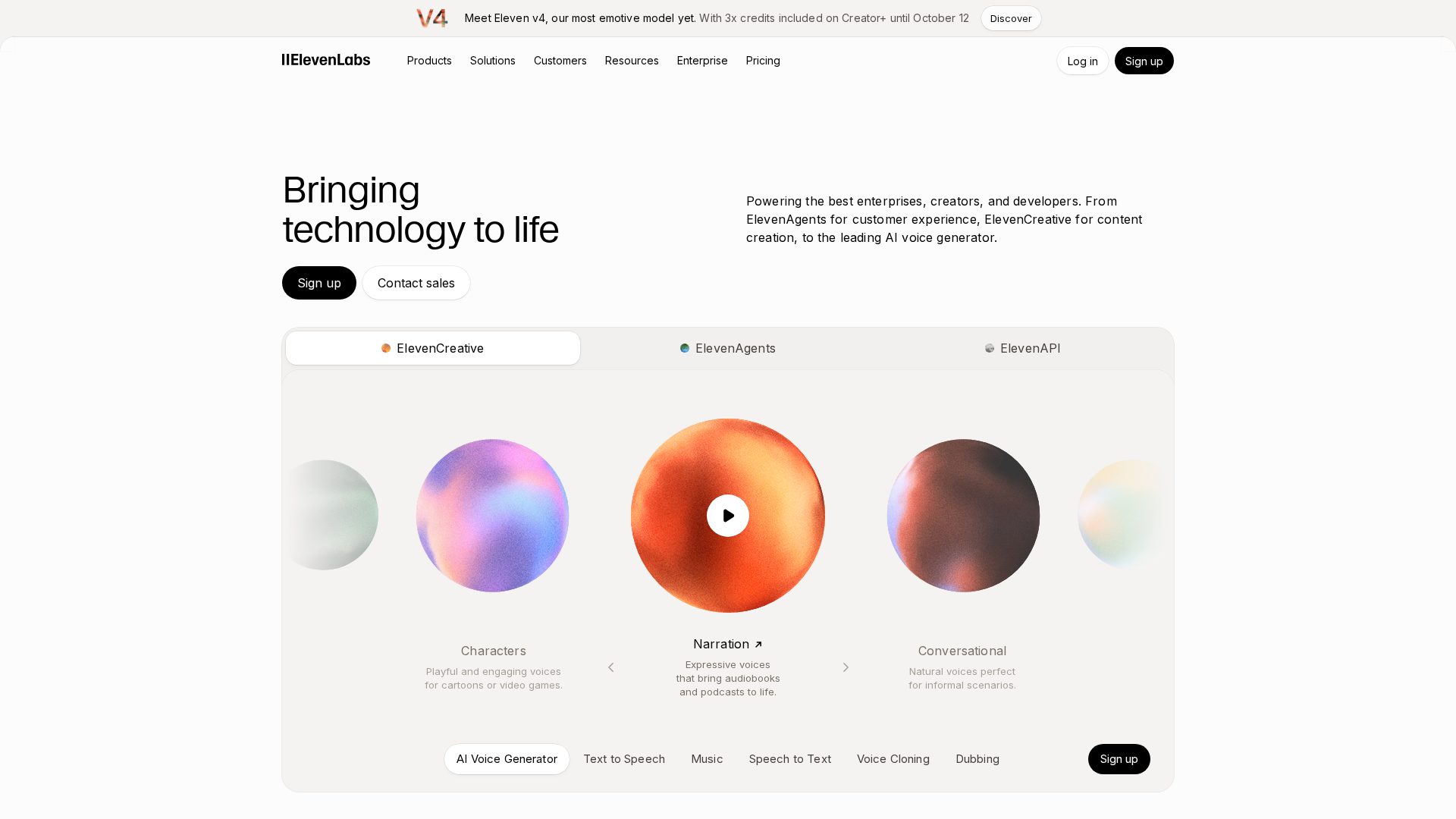
But people are complaining.
Every retry and small tweak burns the credits you paid for.
Trustpilot review, Aug 2026 ↗Cancel or downgrade, and your unused credits are gone.
ElevenLabs help page: unused credits lost on cancel ↗Support is an AI bot, and reaching a human is hard.
Trustpilot review, Oct 2026 ↗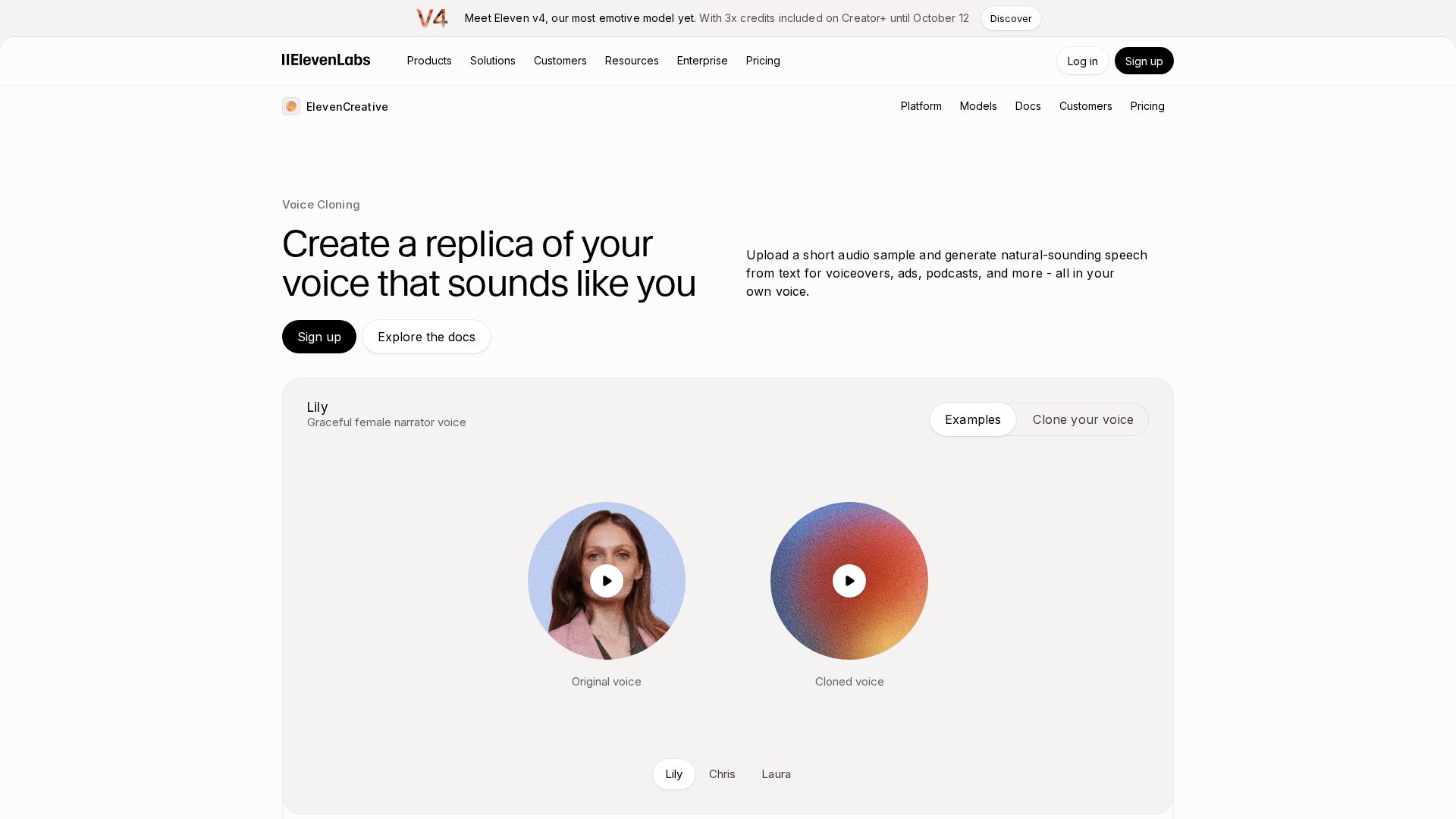
$264a year
Creator is $22 a month if you pay month to month.
That's $264 a year.
That buys about 121 minutes of audio a month, and every extra minute costs about 18 cents.
Right now the page shows half off the first month, then it goes back to $22.
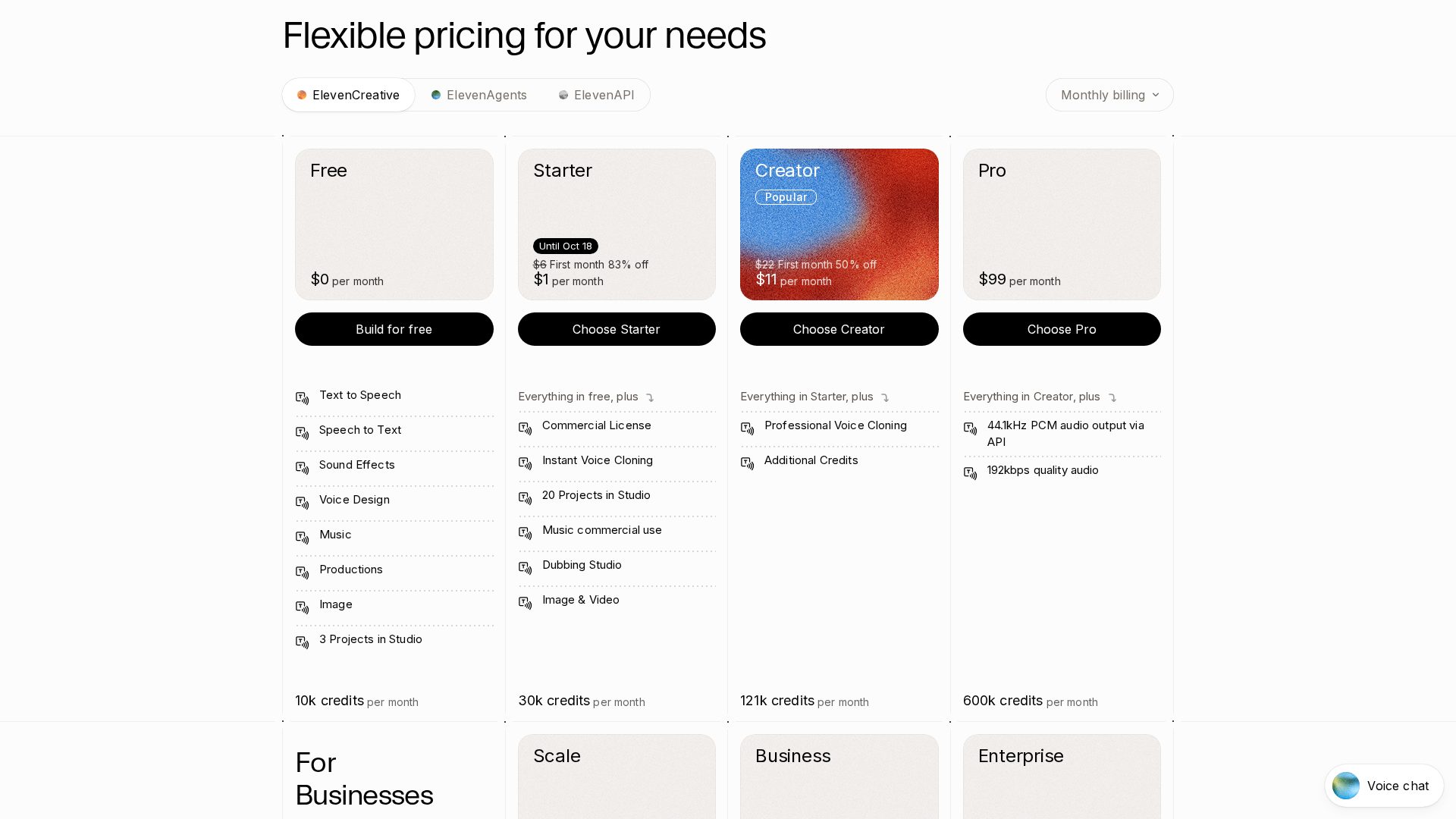
A research team inside Microsoft put VibeVoice on GitHub in August 2025.
Eleven days later they deleted every line of code and left one commit, named "statement", saying the tool was being used in ways they didn't intend.
The code came back that December, and the team has been shipping from the same repo ever since.
VibeVoice is the open source AI voice engine you can run on your own computer.
github.com/microsoft/VibeVoice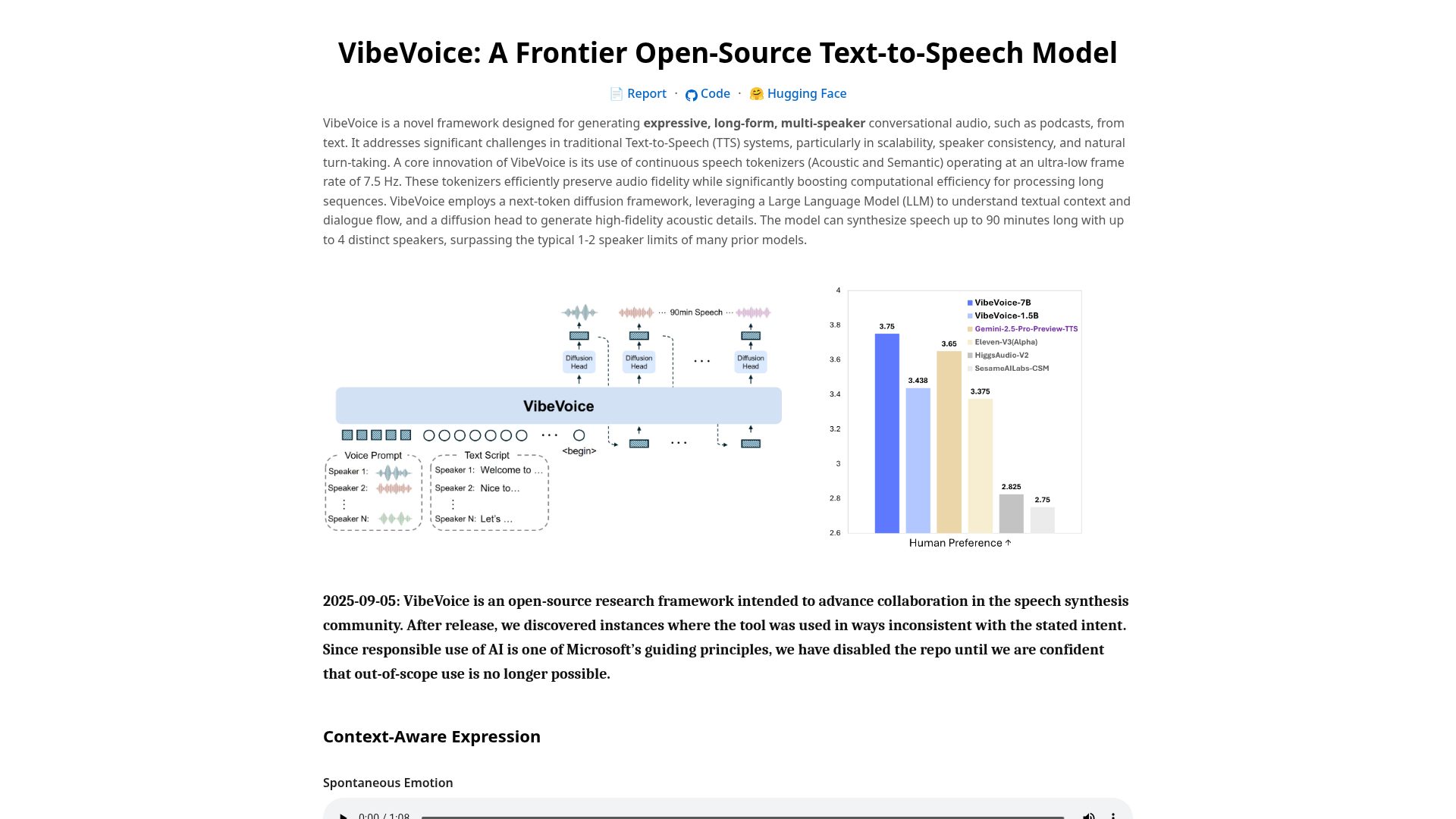
VibeVoice is Microsoft's own speech AI, and the code and the models are both free to download.
It runs on your machine, so there is no credit counter and no charge per minute.
Your agent can feed it words as it writes them, and it starts talking about a third of a second later.
It needs a graphics card, and Microsoft links a free Colab notebook if you don't have one.
You own the code, so Claude Code can change it.
Their page: https://microsoft.github.io/VibeVoice/
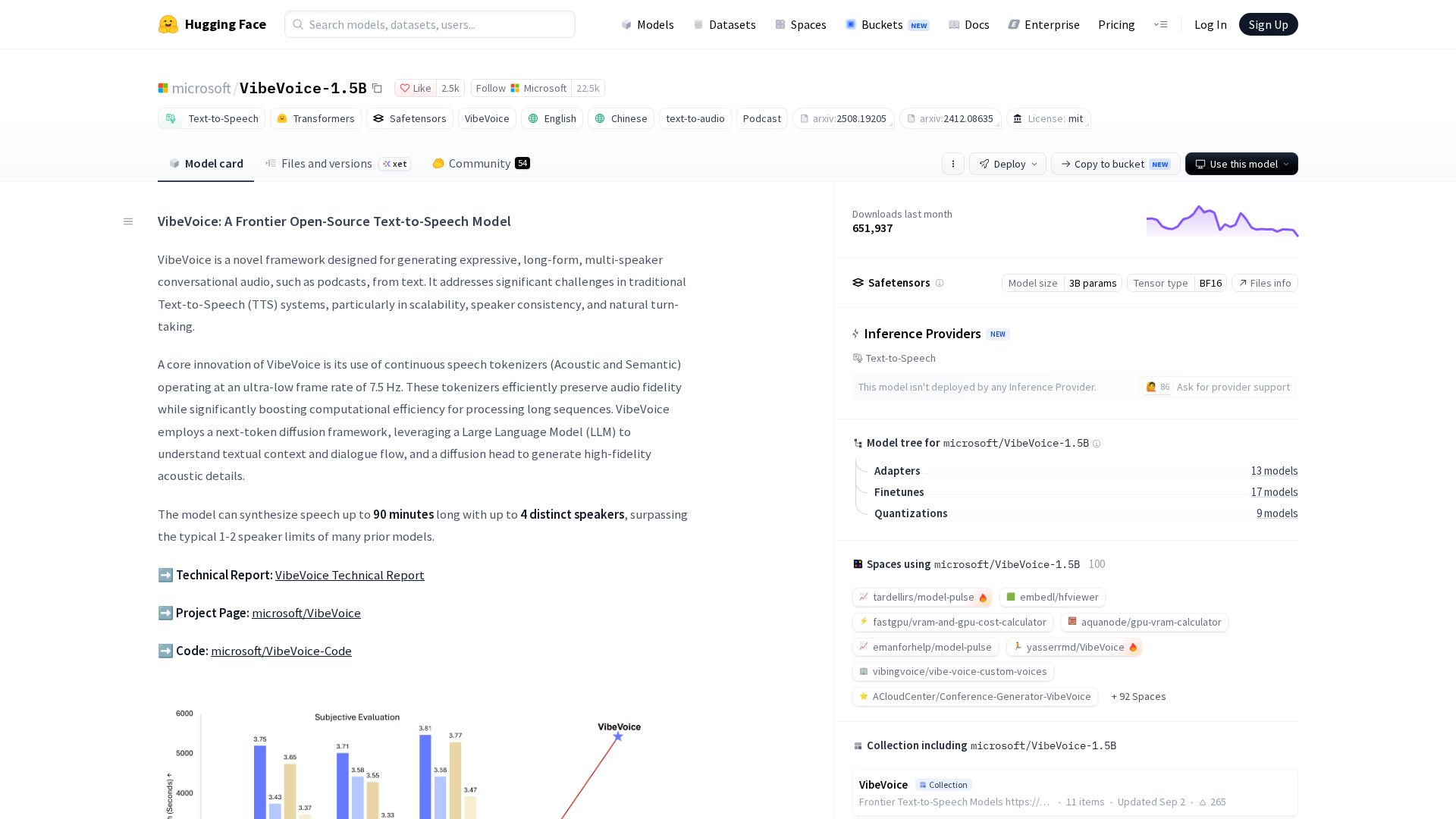
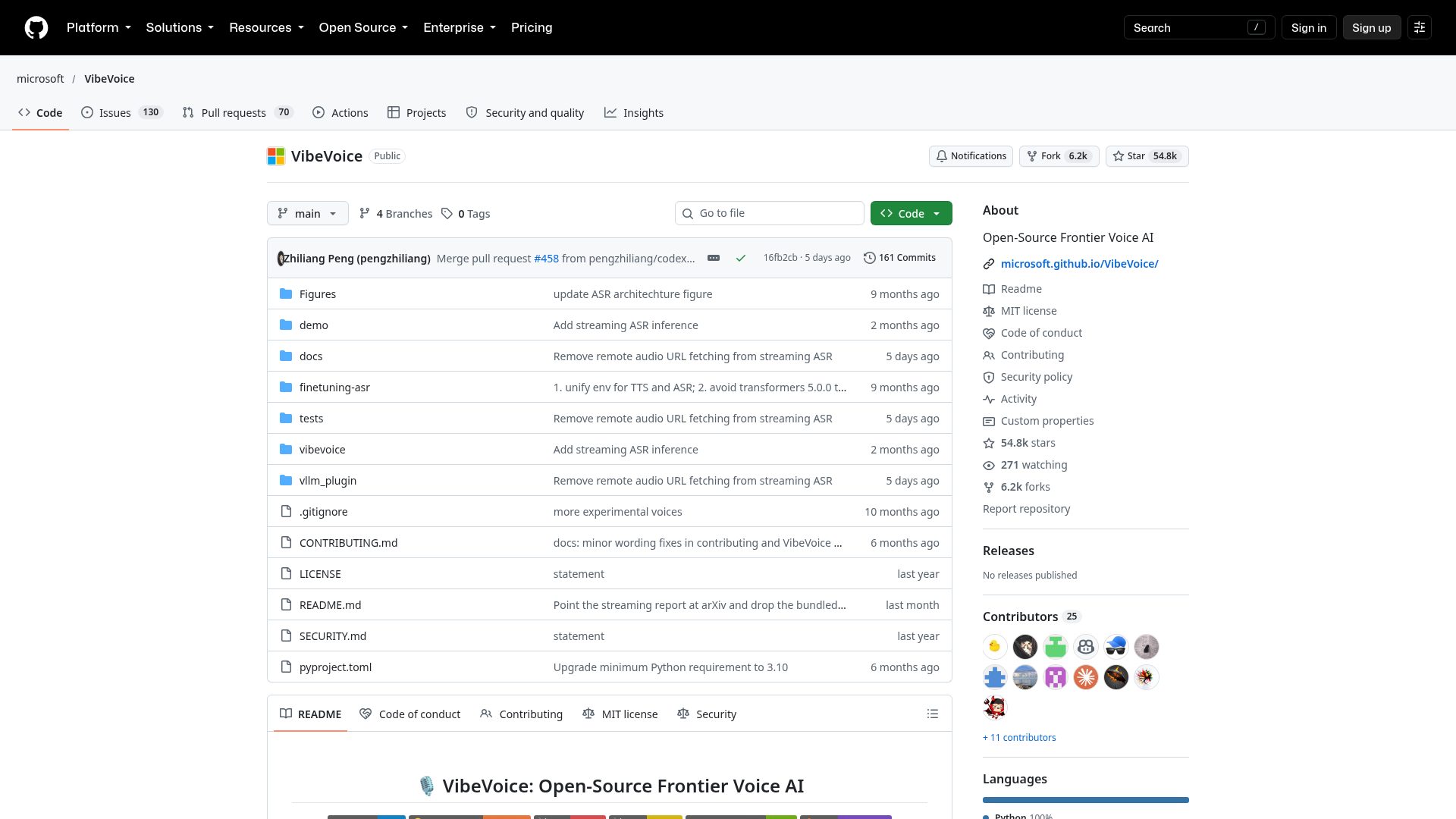
The big model that does 90-minute podcasts with four speakers is switched off here, and Microsoft's own page says "Disabled due to widespread misuse.
Those weights are still free on Hugging Face, and a community copy of the repo, vibevoice-community/VibeVoice, keeps that code working.
Microsoft says these models are for research and development, and does not recommend them for commercial work without more testing of your own.
You need an NVIDIA graphics card or a recent Mac, and Microsoft's own setup starts inside an NVIDIA container.
There is no app and nothing packaged to download, the real-time voice is one speaker in English, and you can't clone your own voice with it.
Your script. Your voices. Your transcripts. Your computer.
But people are complaining.
Prepaid credits expire after a year, with no warning.
OpenAI Developer Community, Mar 2026 ↗An agent stuck in a loop keeps spending, with no stop button.
OpenAI Developer Community bug thread, support confirmed ↗Higher rate limits arrive only after you have spent enough.
OpenAI's own usage-tier table ↗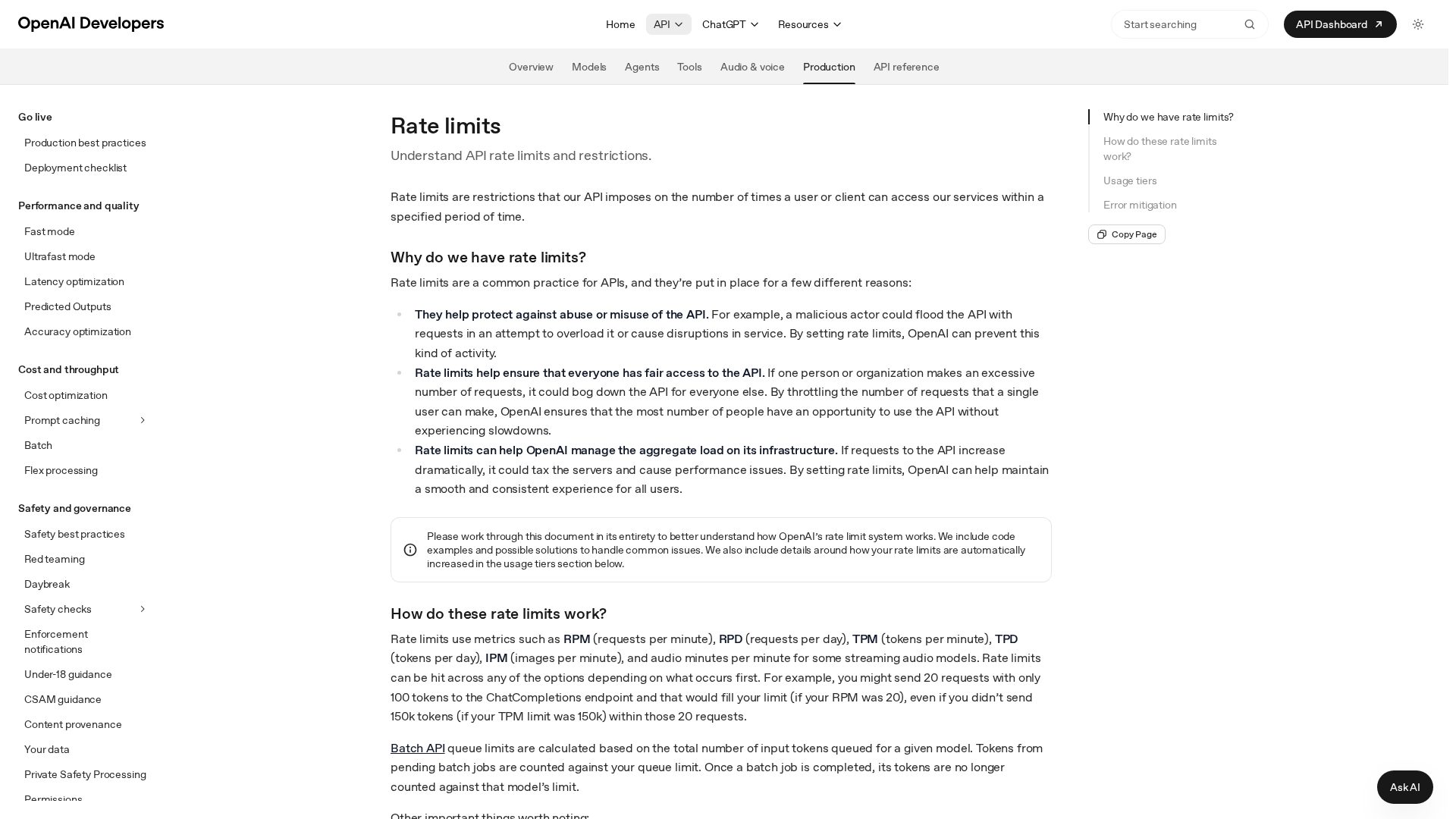
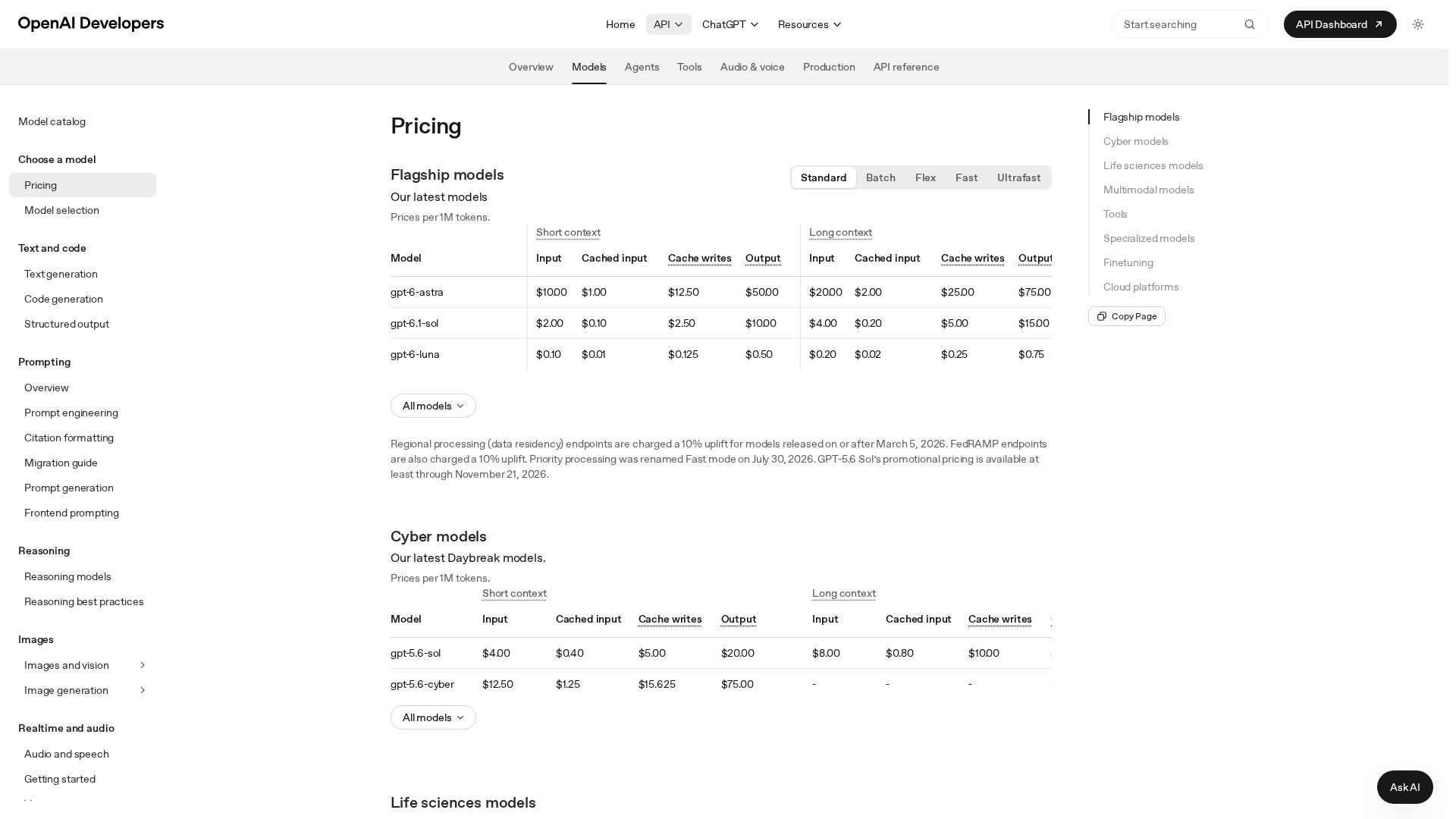
$9,000a year
There is no monthly plan here, so you pay for whatever your agent used.
Say one agent reads 50 million tokens a month and writes 5 million.
On OpenAI's and Anthropic's top models, that is about $750 a month.
That's $9,000 a year.
On their mid-range models it's about $150 a month, which is $1,800 a year.
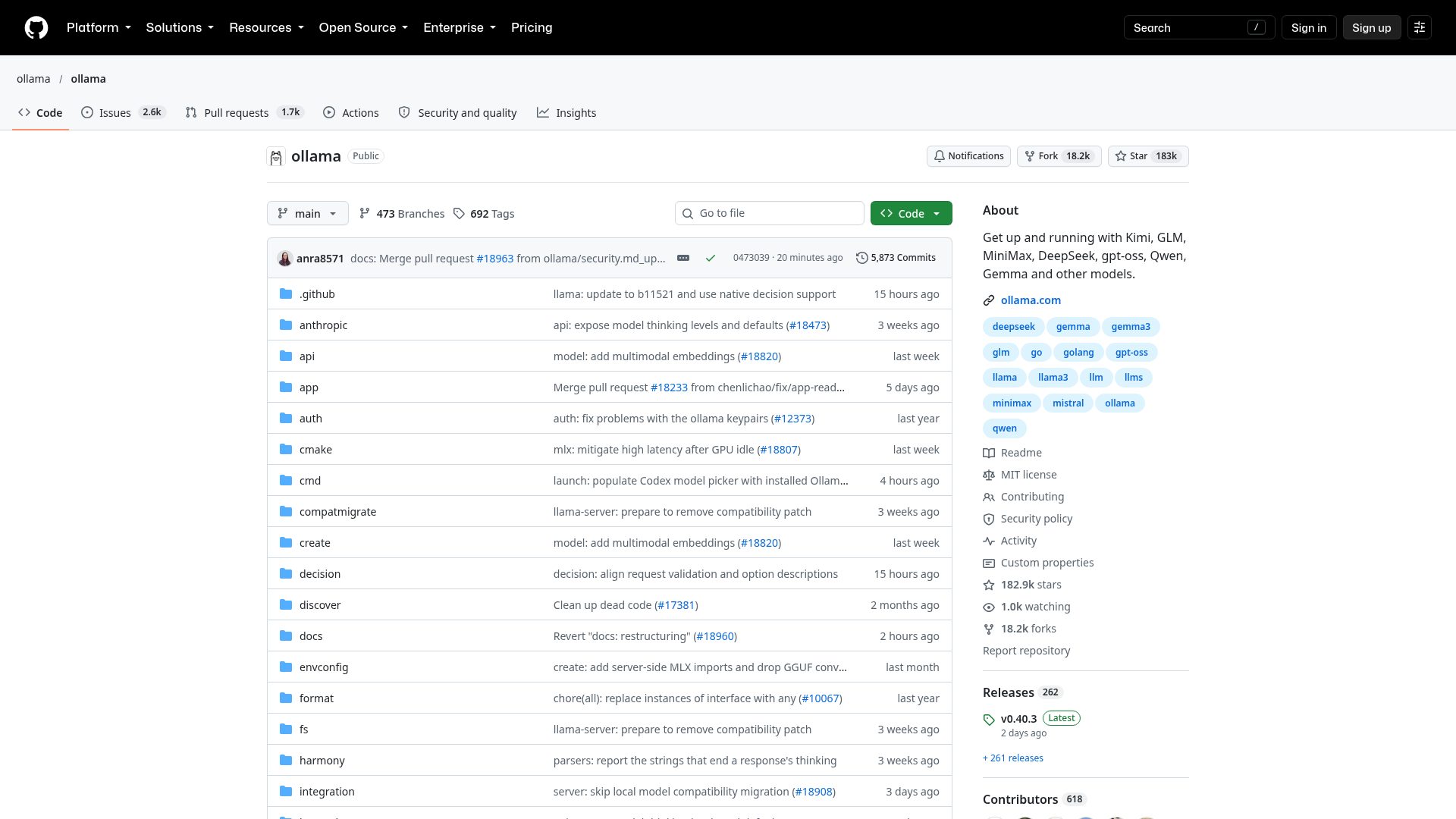
Ollama comes from two founders who helped build Docker Desktop, after Docker bought their first company.
Three years later they say nearly nine million developers a month use it, and they have raised $88 million.
Ollama is the open source way to run AI models on your own computer.
github.com/ollama/ollama
Ollama downloads an AI model onto your machine and runs it there, for nothing.
Your agent points at Ollama instead of a paid API, and the bill stops.
It connects to Claude Code, Codex, Copilot and OpenClaw straight out of the box.
Run it locally and nothing you type leaves your computer.
You own the code, so Claude Code can change it.
Their site: https://ollama.com
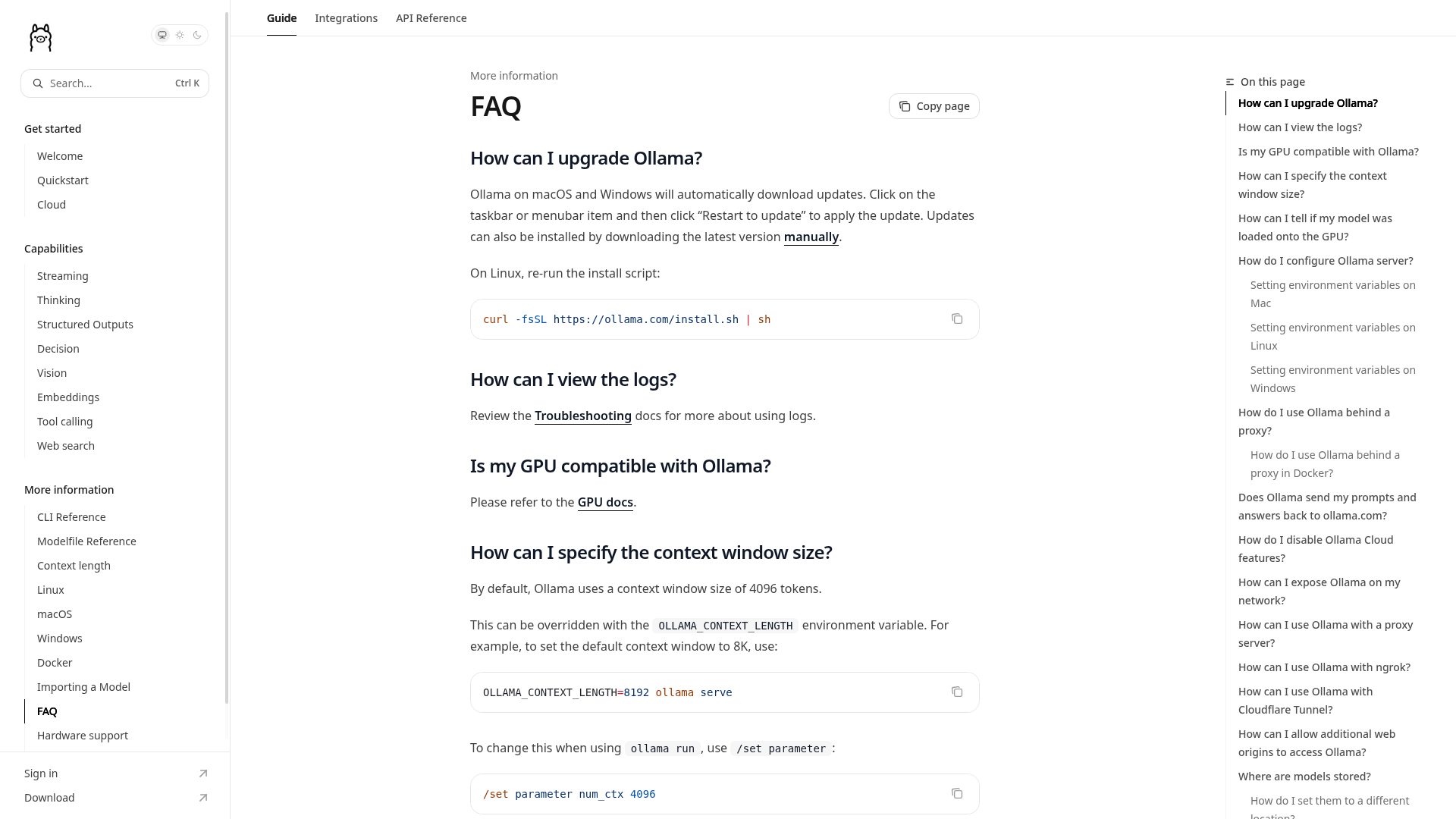
Free means local, so your own hardware is the limit.
Ollama's own docs show a 70-billion-parameter model needing 42 gigabytes of memory.
The small models that fit on a laptop are not as sharp as the paid flagships.
Ollama sells a cloud too, $20 a month for Pro, and running models on your own machine stays free.
FreeLLMAPI, the free-key switchboard we covered on last week's show, needs no hardware at all, but every free key it pools comes with a daily cap.
Your models. Your prompts. Your hardware. Your computer.
But people are complaining.
Prices go up again, and the tool gets buggier every week.
Atlassian Community, Jira forum, Aug 29 2026 ↗Every add-on you buy must cover all your users too.
Atlassian's own purchasing and licensing FAQ: "All Marketplace apps must match (or exceed) the parent product's tier." ↗Renewals and upgrades cannot be refunded, Atlassian's own policy says.
Atlassian support doc, Request a refund: "Cloud renewals and upgrades cannot be refunded." ↗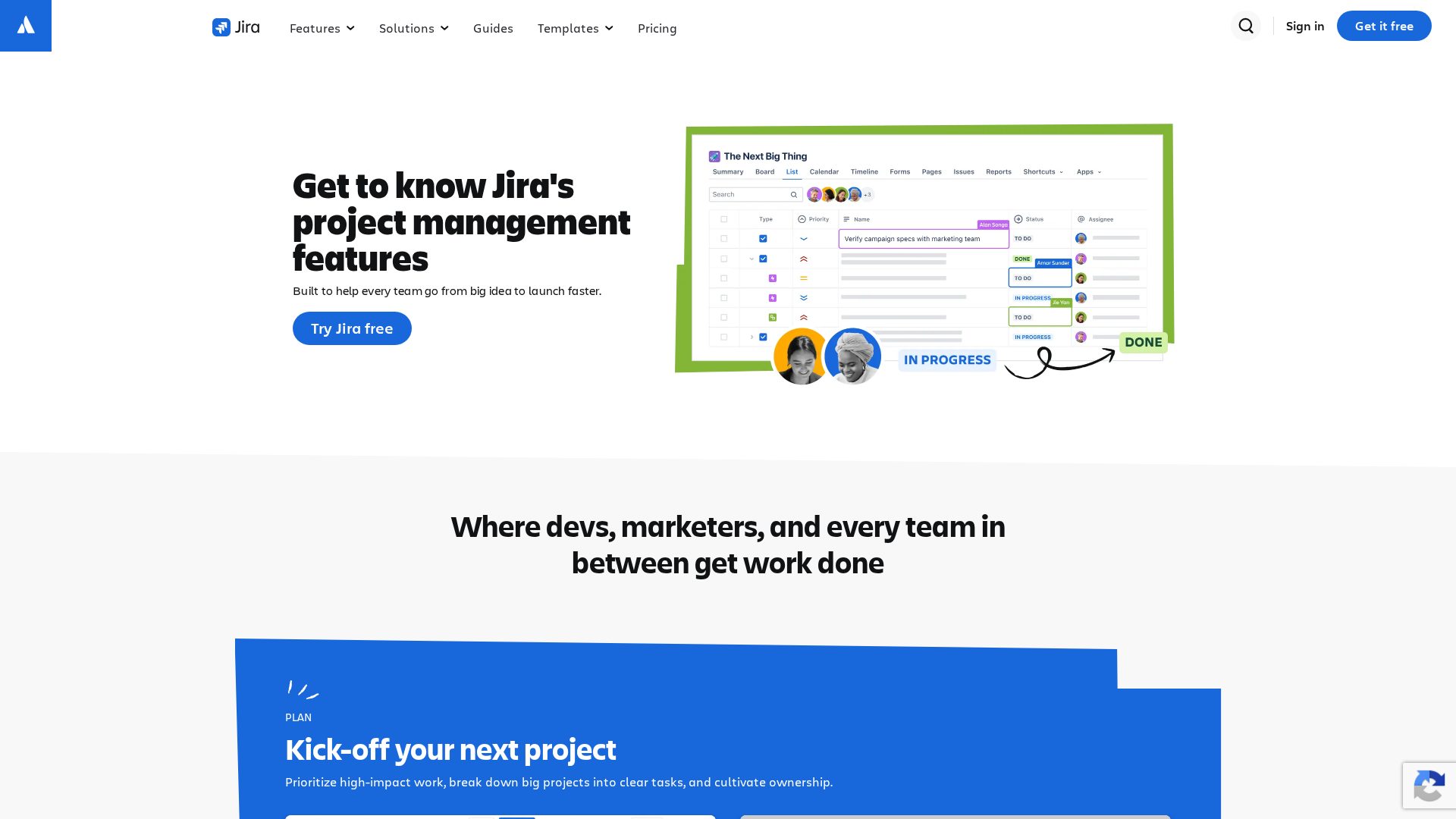
$1,086a year
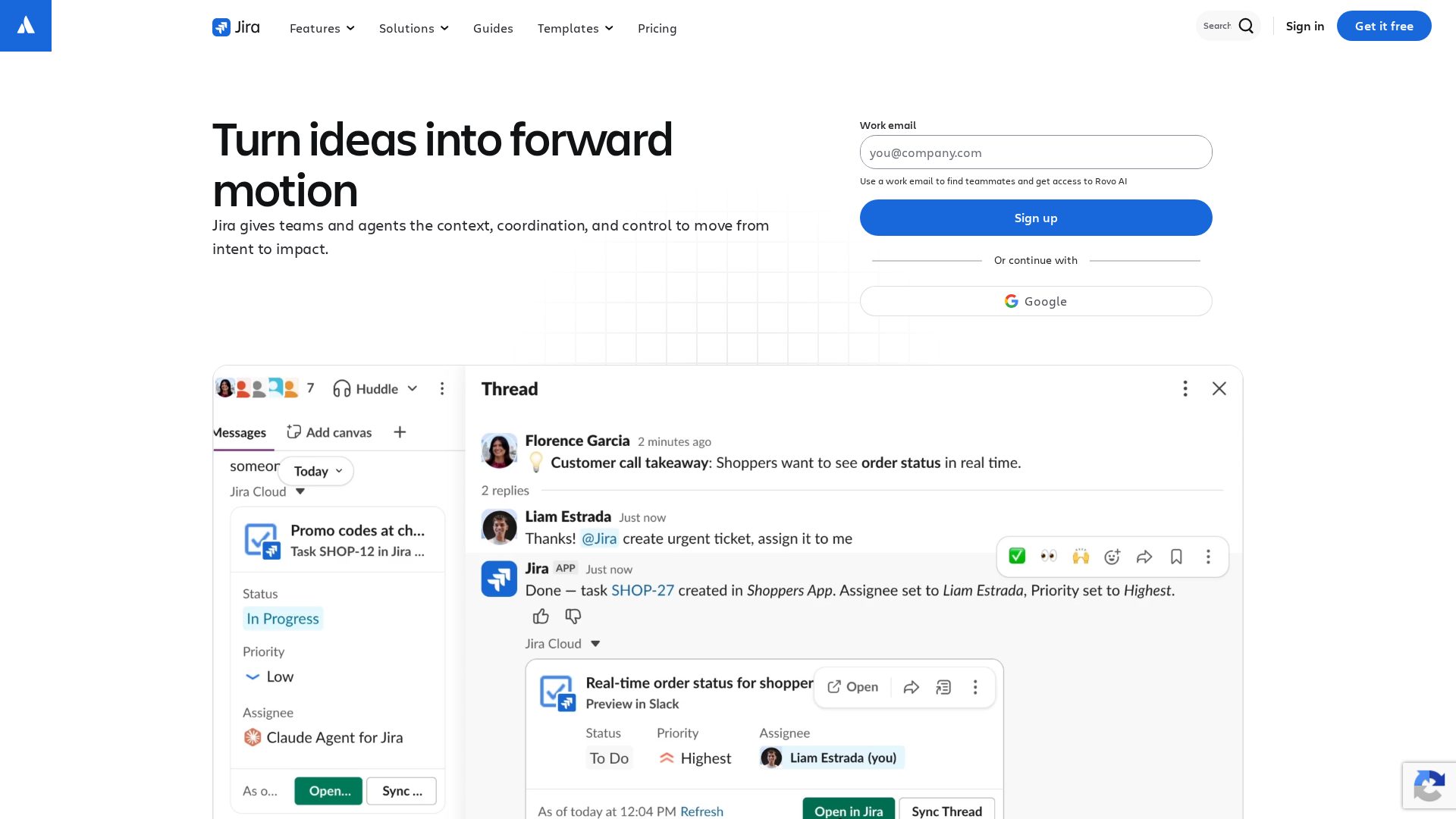
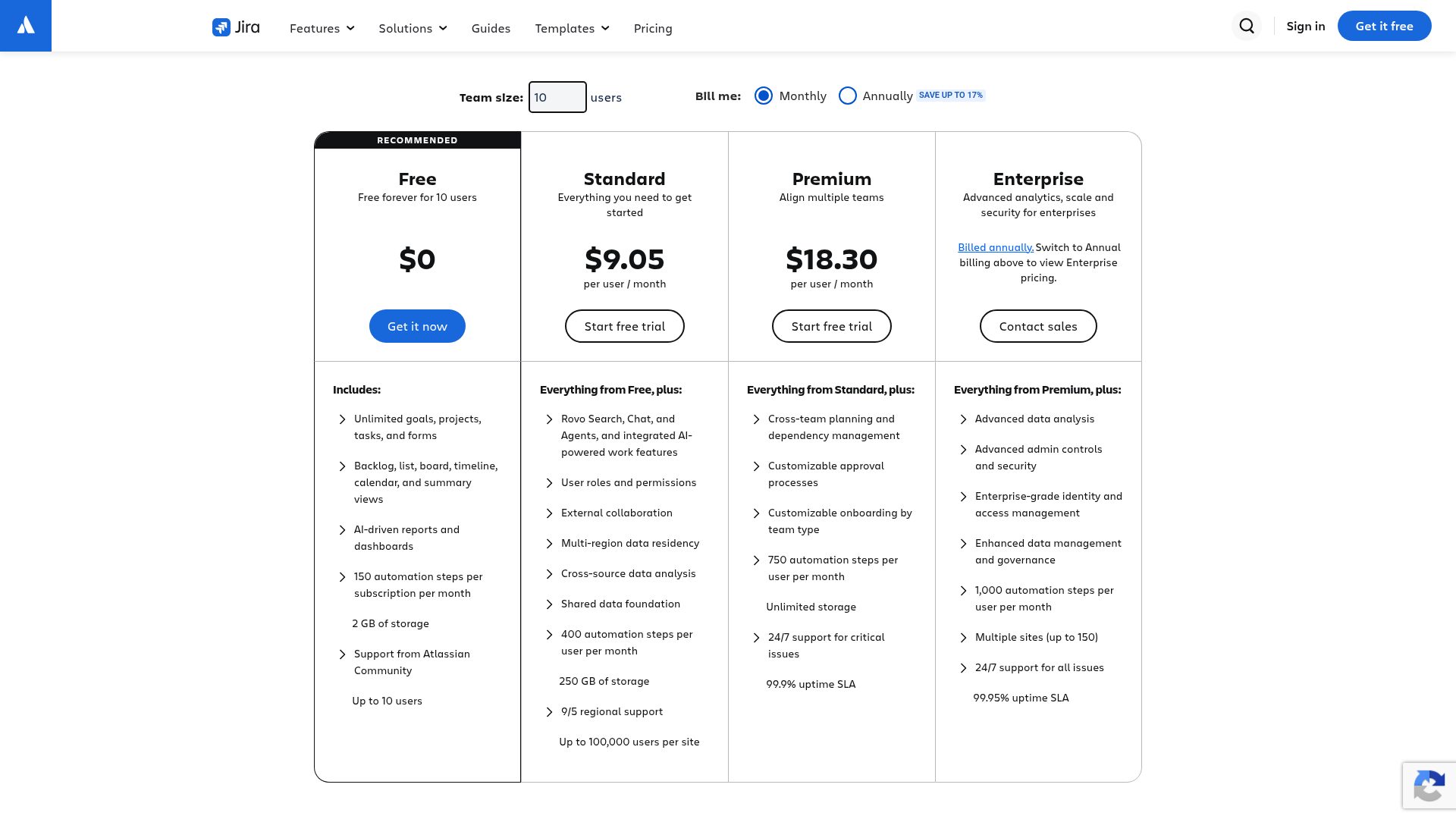
Standard is $9.05 per person a month if you pay month to month.
For a team of ten, that's $1,086 a year.
Tomorrow it goes to $9.70 a person, which is $1,164 a year for those same ten.
Atlassian's pricing page does not show that date today, but its own solution partners published the new number and the October 13th start weeks ago.
Linear's cheapest paid plan, Basic, is $12 a person a month if you pay month to month, which is $1,440 a year for ten.
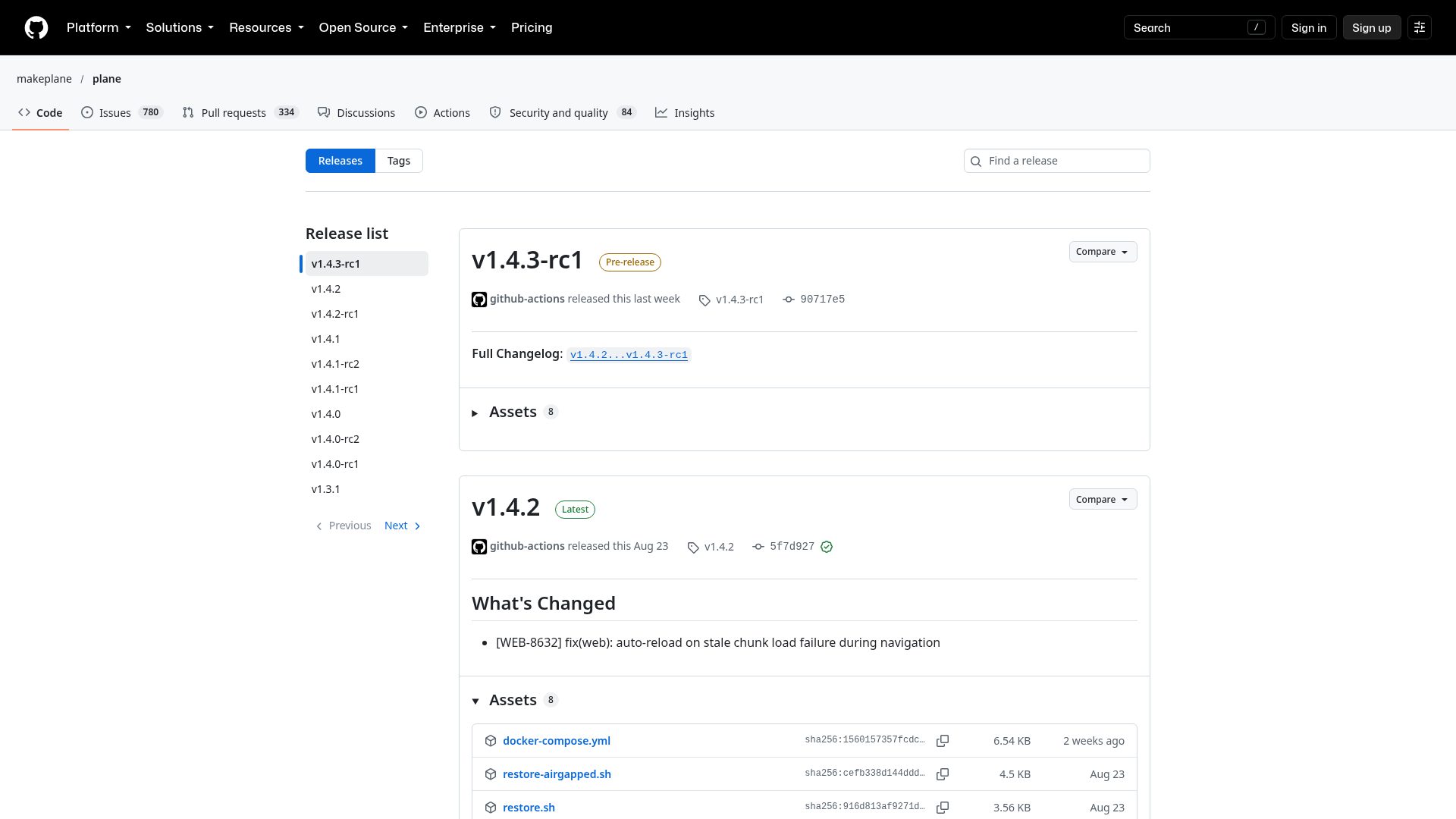
Plane was started in November 2022 by two founders who had spent years managing client work at an IT consulting company.
The first version was an internal tool to fix the parts of that job that kept going wrong.
OSS Capital, a firm that only backs open source alternatives to paid software, put in $4 million, and the code has been public the whole time.
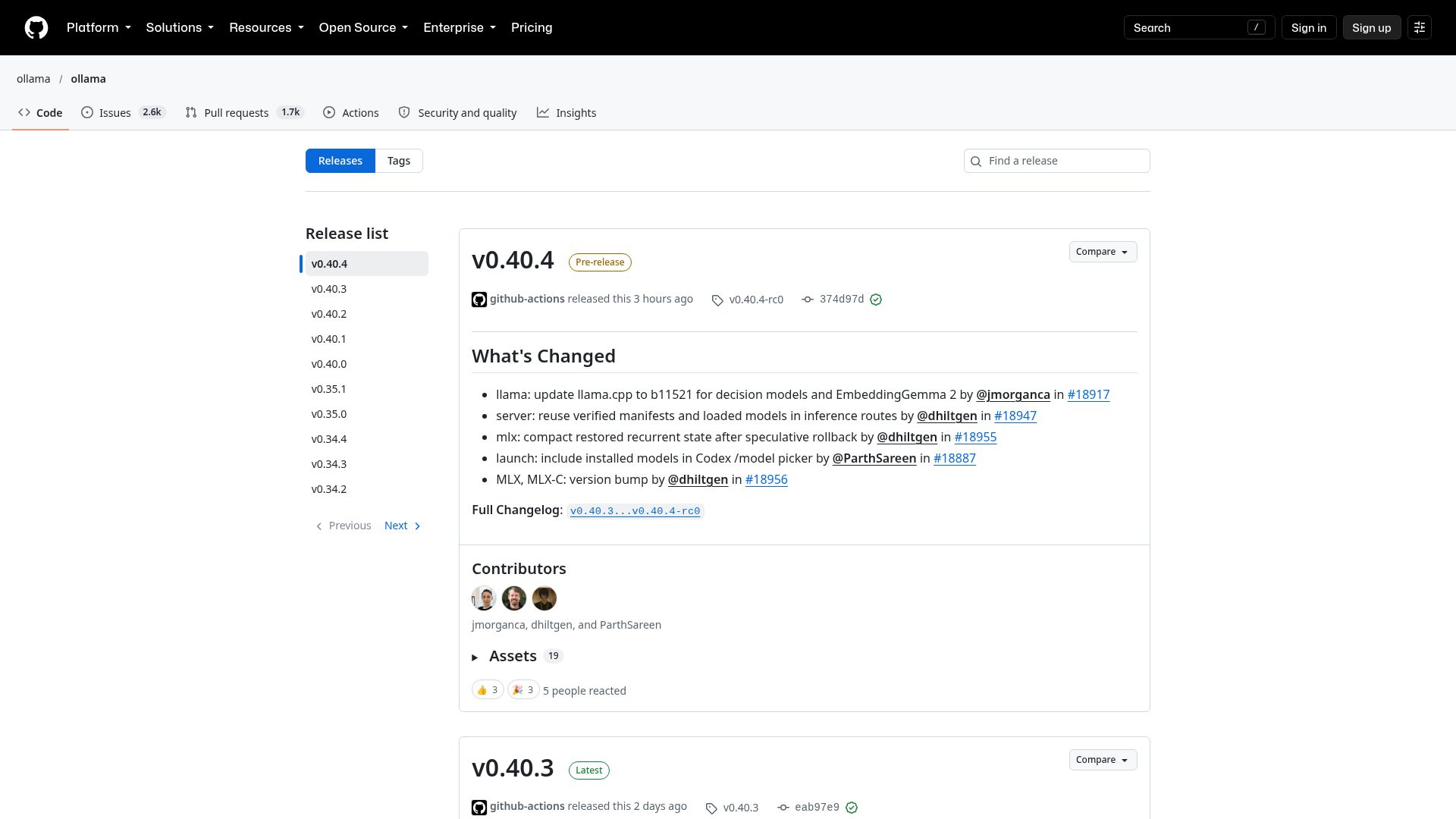
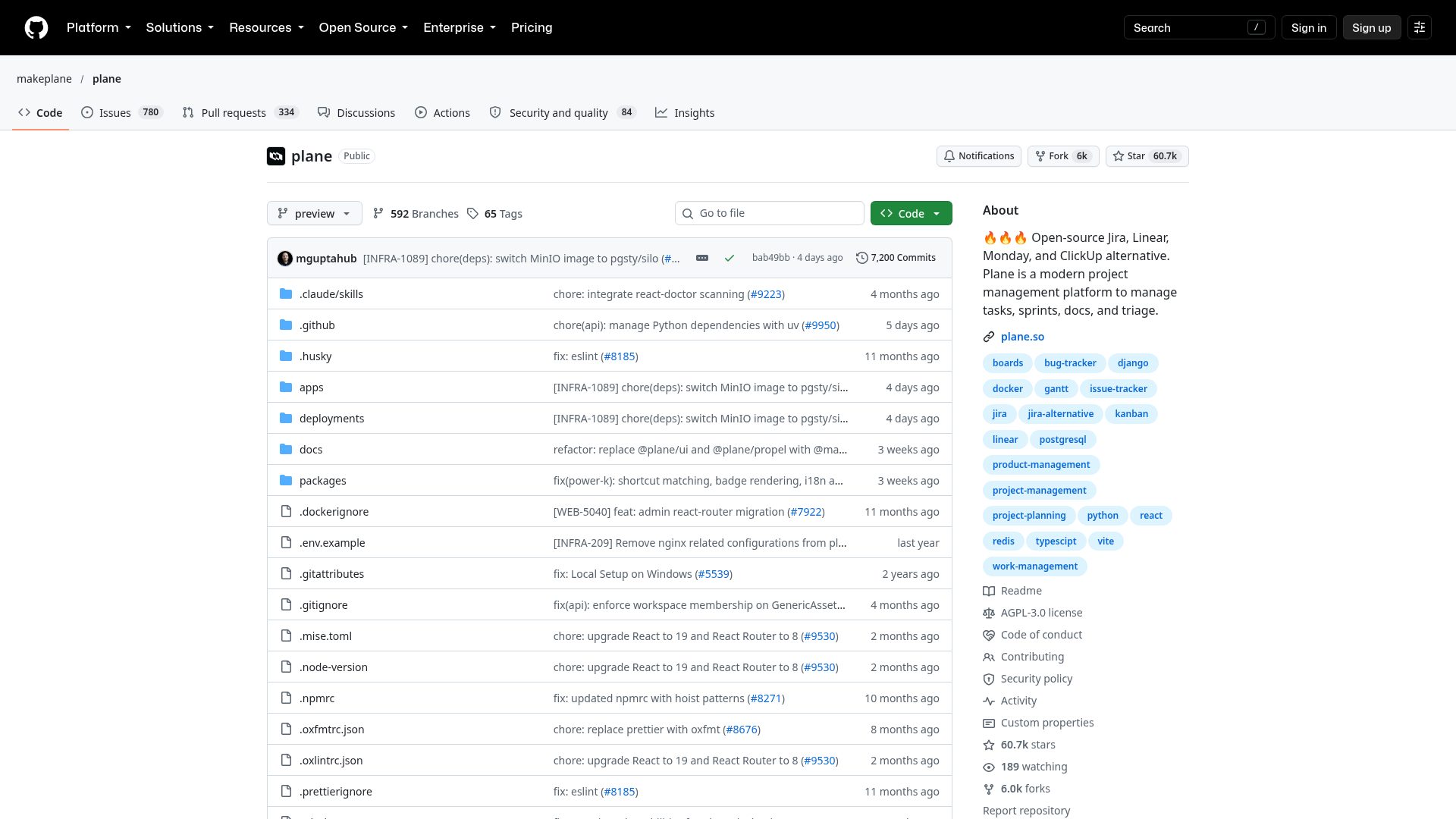
Plane is the open source project tracker you can run on your own server.
github.com/makeplane/plane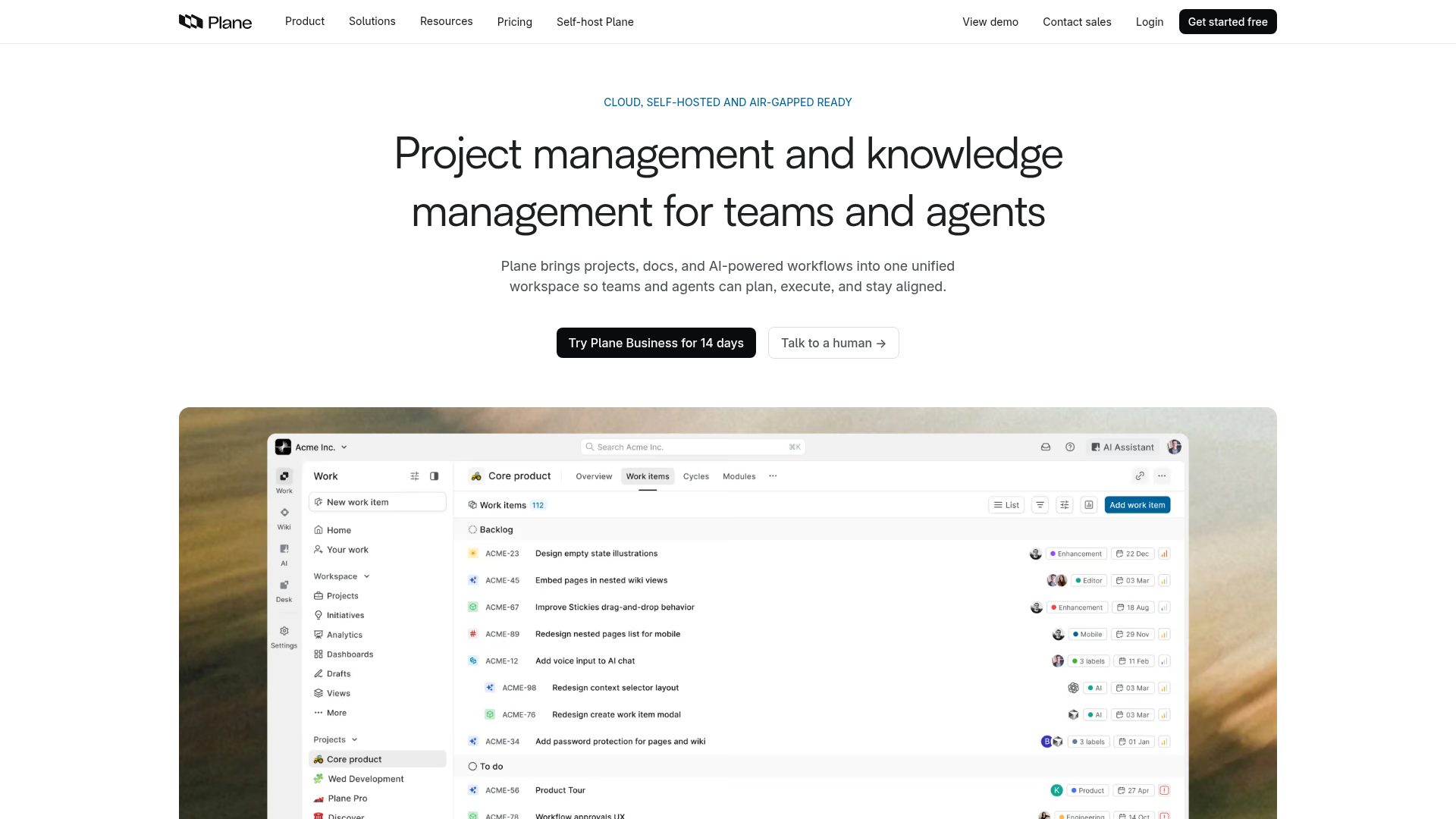
Plane's Community Edition is free and open source, and you install it with Docker or Kubernetes on a machine you control.
The work items, the cycles with burn-down charts, the modules, the saved views and the pages all live on your own box.
Plane publishes a free MCP server, so Claude or Cursor can create and move work items in the Plane on your own server.
You own the code, so Claude Code can change it.
Their self-hosting docs: https://developers.plane.so/self-hosting/overview
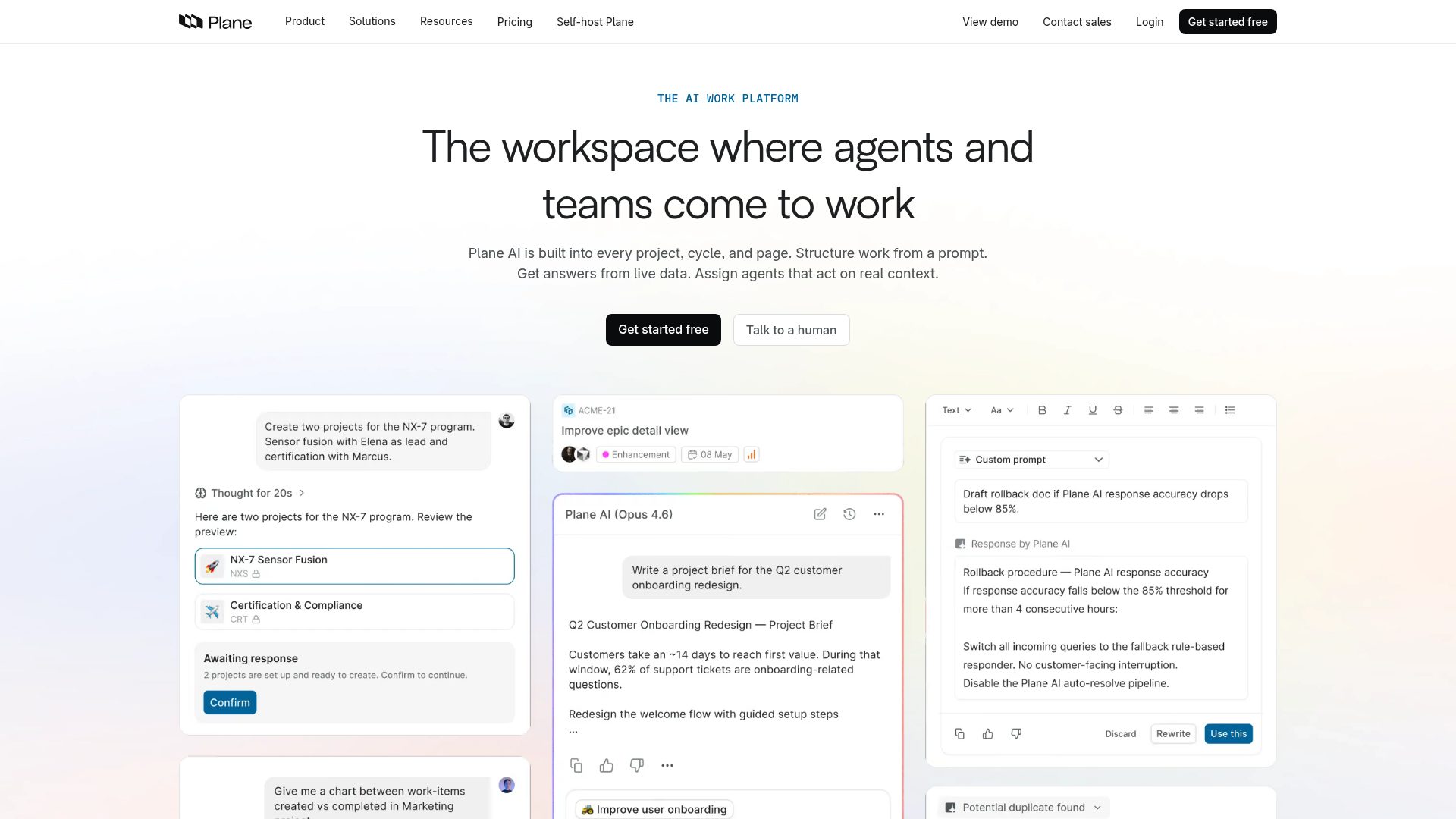
Plane AI, which is the chat, the duplicate catcher and the agents you assign work to, sits in the paid Commercial Edition, not the free open source one.
The self-hosted Commercial Edition Plane points you to is closed source, and it runs free for 12 people before you buy a licence.
Plane's own docs say the free Community Edition matches the free tier of their cloud, feature for feature, so the fancier boxes are paid.
Running it is a real server job, and Plane's own page asks for 4 processor cores, 8 GB of memory and 50 GB of storage.
Your projects. Your tickets. Your agents. Your server.
But people are complaining.
Unused credits vanish each month on Hobby, Standard and Growth.
Firecrawl's own pricing FAQ, Oct 2026 ↗A page blocked by bot detection still costs a credit.
Customer bug report on GitHub, Nov 2025 ↗Cancel your plan and the credits you bought expire.
Firecrawl's own billing FAQ, Oct 2026 ↗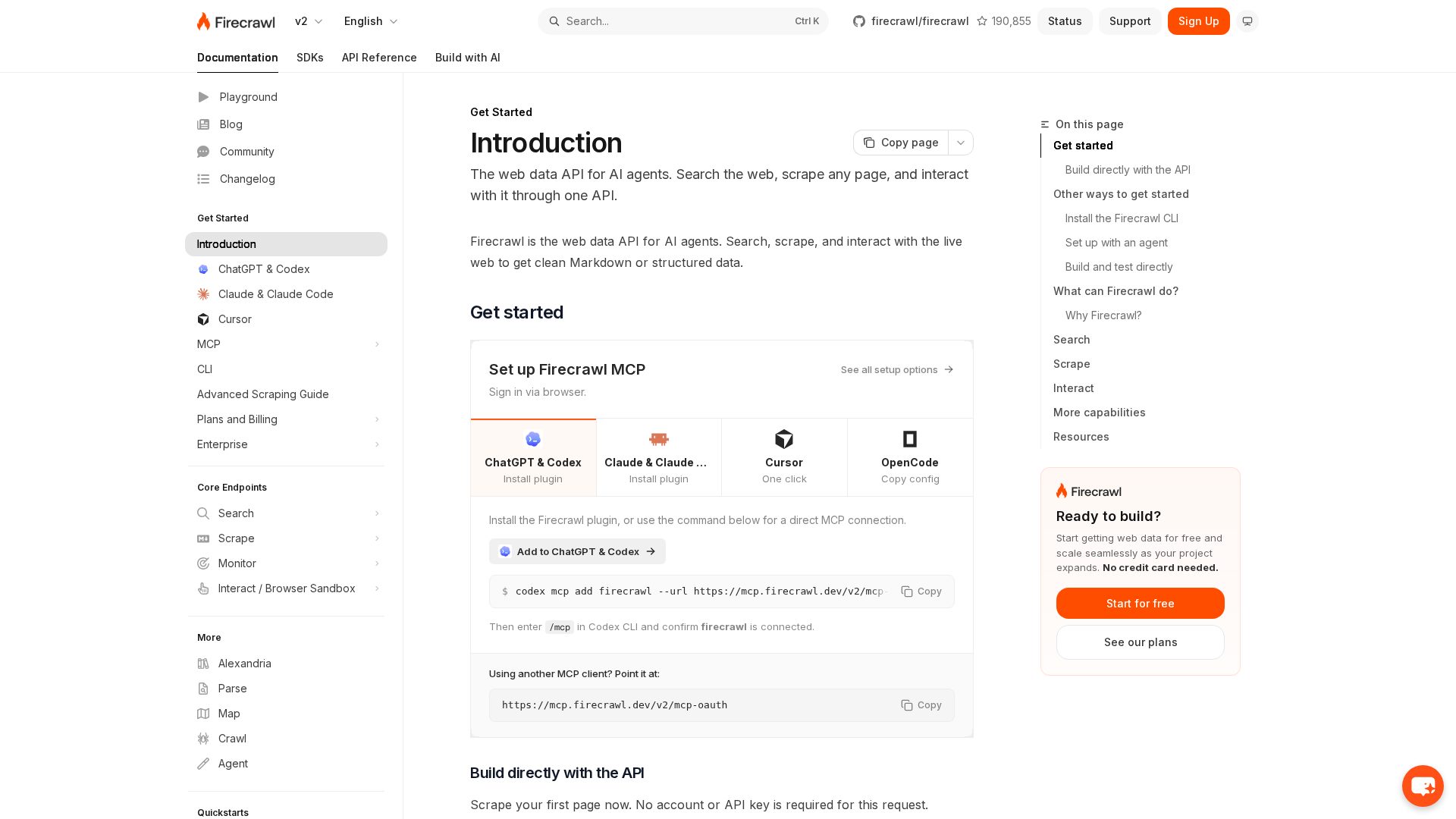
$228a year
Hobby is $19 a month if you pay month to month.
That's $228 a year, and it covers 5,000 pages a month.
Need 100,000 pages a month and you're on Standard, $99 a month, which is $1,188 a year.
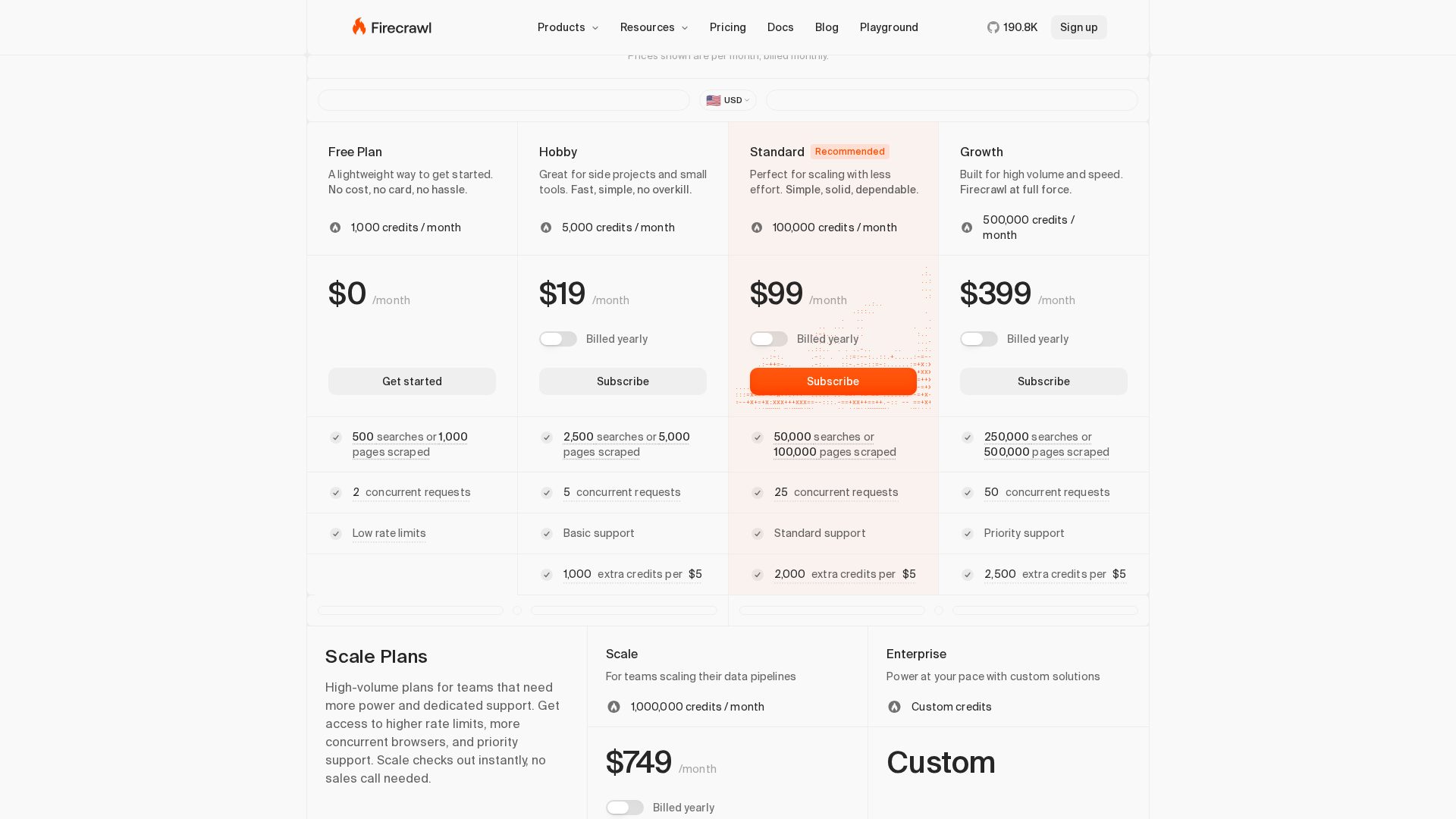
Apify's cheapest paid plan, Starter, is $19 a month too, $228 a year, and that $19 is only credit you then spend on compute.
Scrapling was started two years ago this week by a software developer in Egypt.
Fourteen years of building security and hacking tools came first, and the last couple of years went into web scraping.
The GitHub sponsor page says the goal is twenty monthly sponsors, so this work can happen instead of freelancing after the day job.
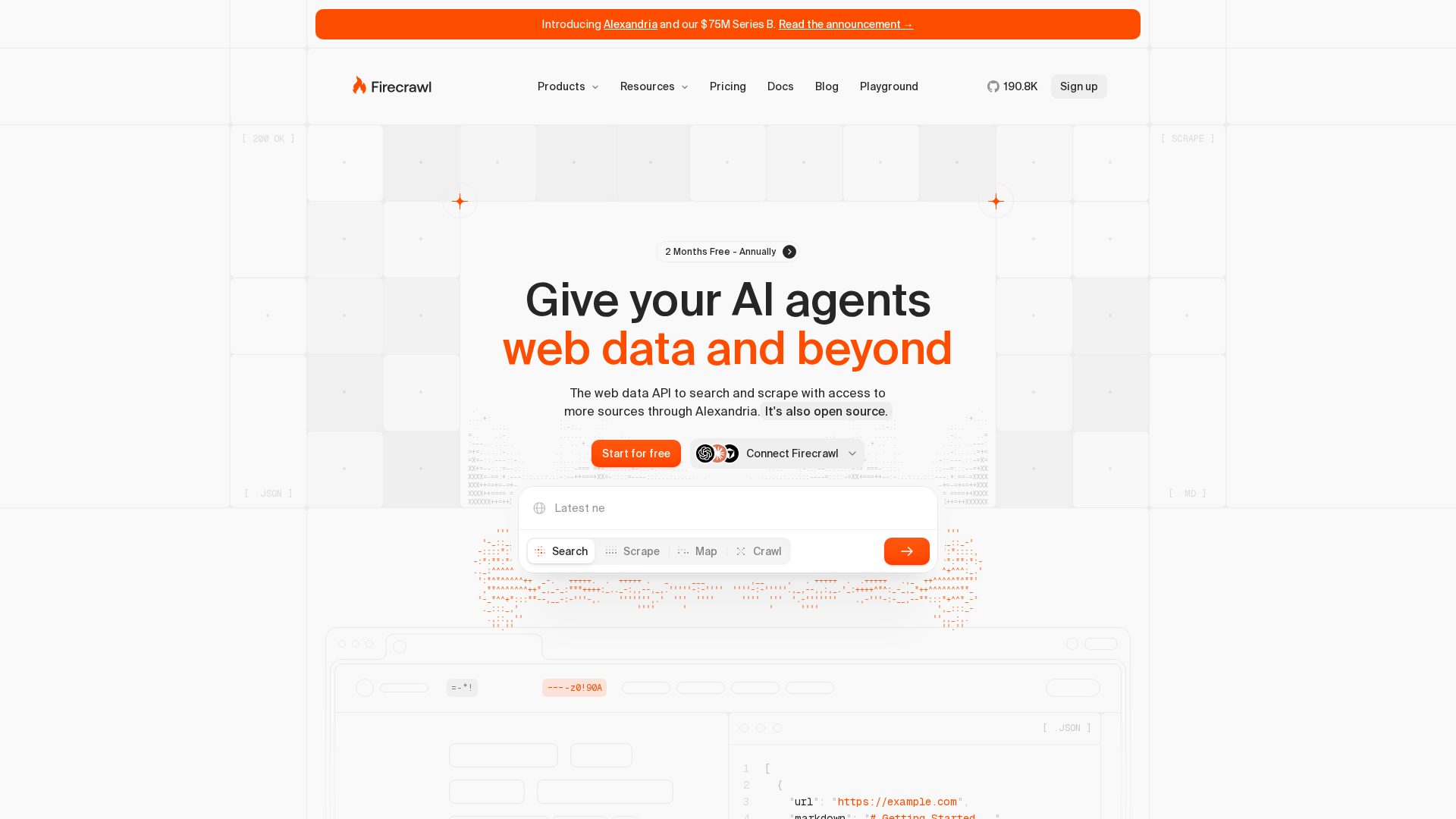
Scrapling is the open source web scraper you can run on your own computer.
github.com/D4Vinci/Scrapling
Scrapling is a free Python library that visits a page the way a real browser does, so the bot checks let it through.
Its own README says the stealth fetcher gets past Cloudflare's Turnstile out of the box.
There are no credits, so your agent can scrape the same page a thousand times and it costs nothing.
Hermes Agent, the open source AI agent from Nous Research, already ships Scrapling as an optional skill you install with one command.
And you own the code, so Claude Code can change it.
Their docs: https://scrapling.readthedocs.io/
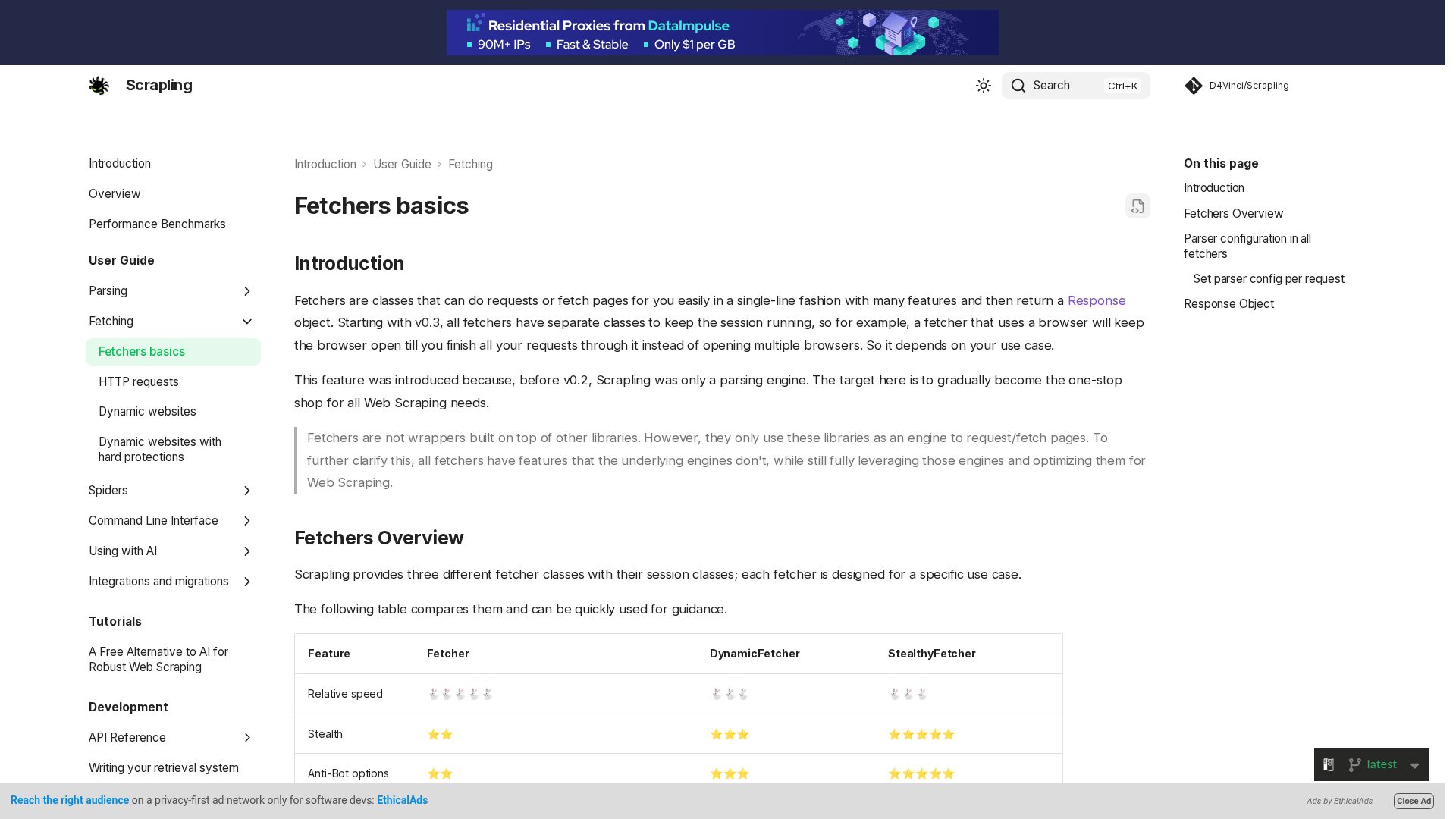
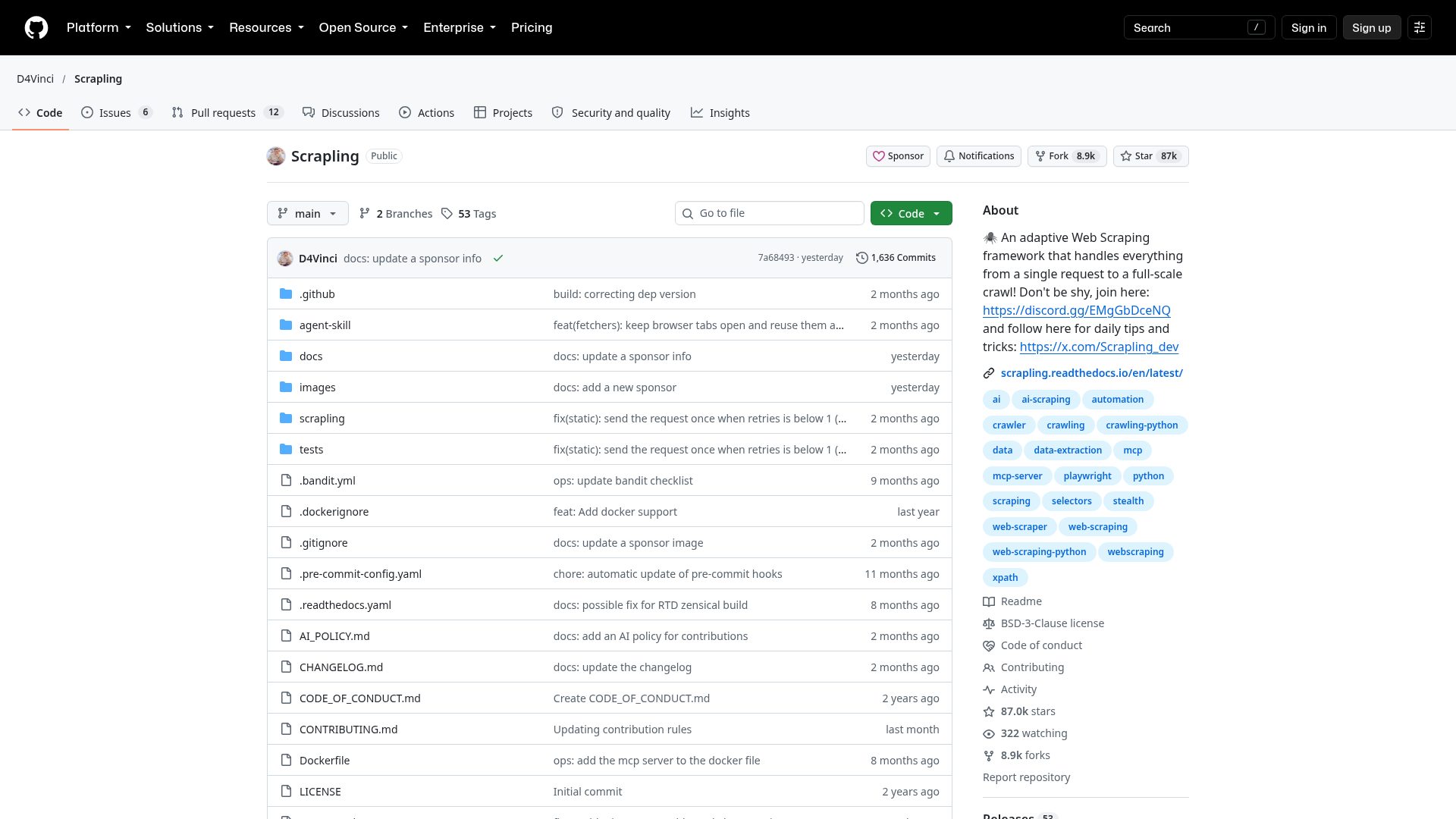
Scrapling is a Python library, not an app with a button, so you or your AI write a few lines of code.
Scraping someone else's site has rules, and Scrapling's own README tells you to respect each site's terms, its robots.txt, and your local scraping and privacy laws.
There is no paid tier and no cloud version, but the maker does sell sponsor spots in the README, from $10 to $1,000 a month.
At real volume you will still pay someone for proxy addresses, which is what most of those sponsors sell.
Your scraper. Your pages. Your proxies. Your computer.
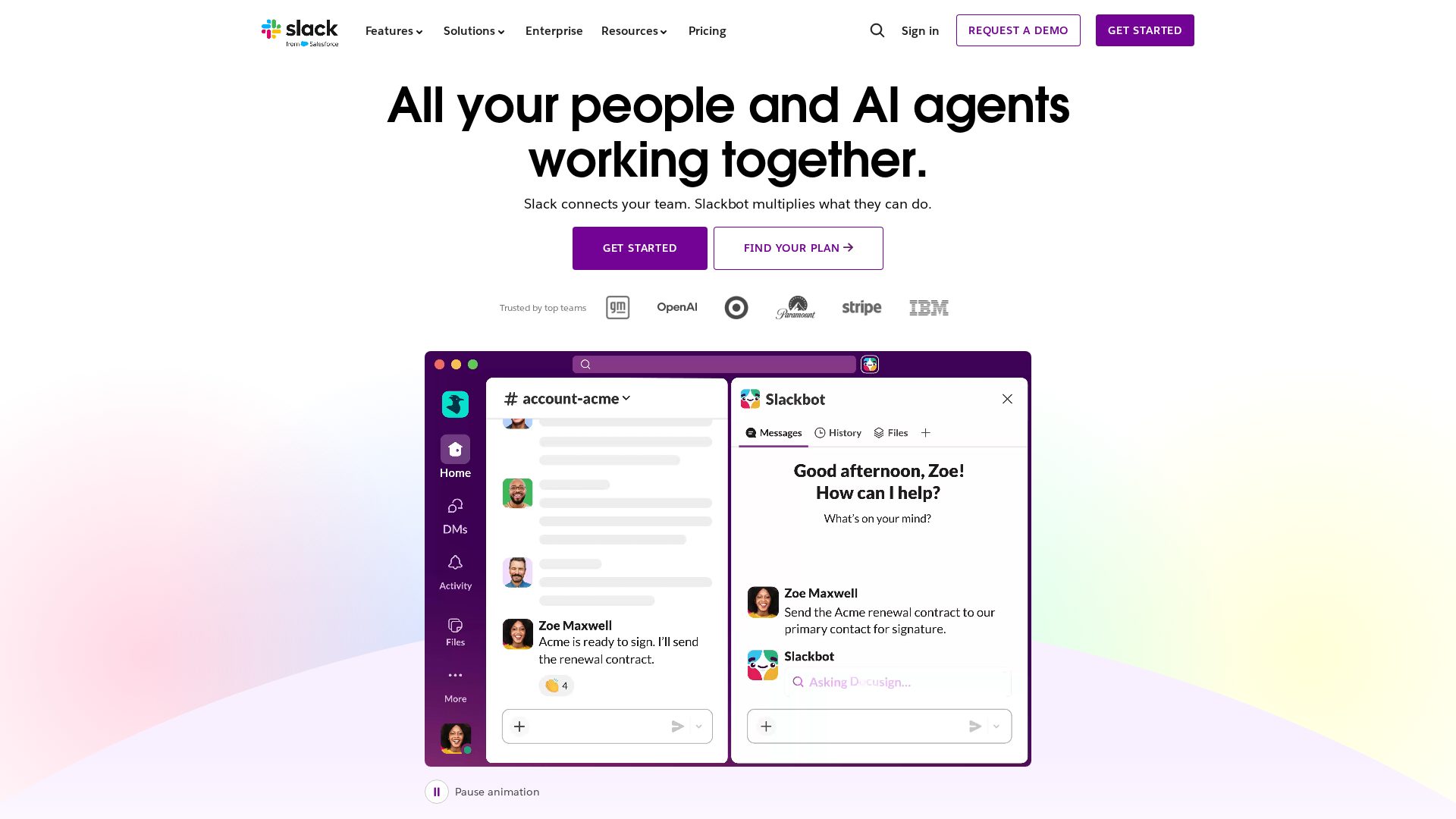
But people are complaining.
Very expensive for what it offers, so they're shopping alternatives.
Trustpilot — Sec Fox, 3/5, Feb 5 2026, "Helps the team to communicate but VERY expensive": "Helps the team to communicate, but is very expensive for what it offers, looking for alternatives." Read live 2026-10-12. ↗Free account history got deleted, with no way to recover it.
Trustpilot — Amrit Roy, 3/5, Sep 14 2025: "History got deleted in free account now dont know how to recover." Matches Slack's own policy page: the Free plan keeps only 90 days of message history, and data over a year old is permanently deleted (https://slack.com/help/articles/115002422943-Message-and-file-retention-on-the-Free-plan). Read live 2026-10-12. ↗Still charged after deactivation, even after asking support to stop.
Trustpilot — Avery Quinn, 1/5, Jan 5 2025, titled "Continues to charge me for old inactive channel with no one on it even, no option to downgrade, and even after contacting support to stop charges": "the channel had been deactivated by the organization and I am still getting charged even though there are no active users, additionally there is nowhere to downgrade, AND I contacted customer support about it a month ago and they continue to charge me anyways." Read live 2026-10-12. ↗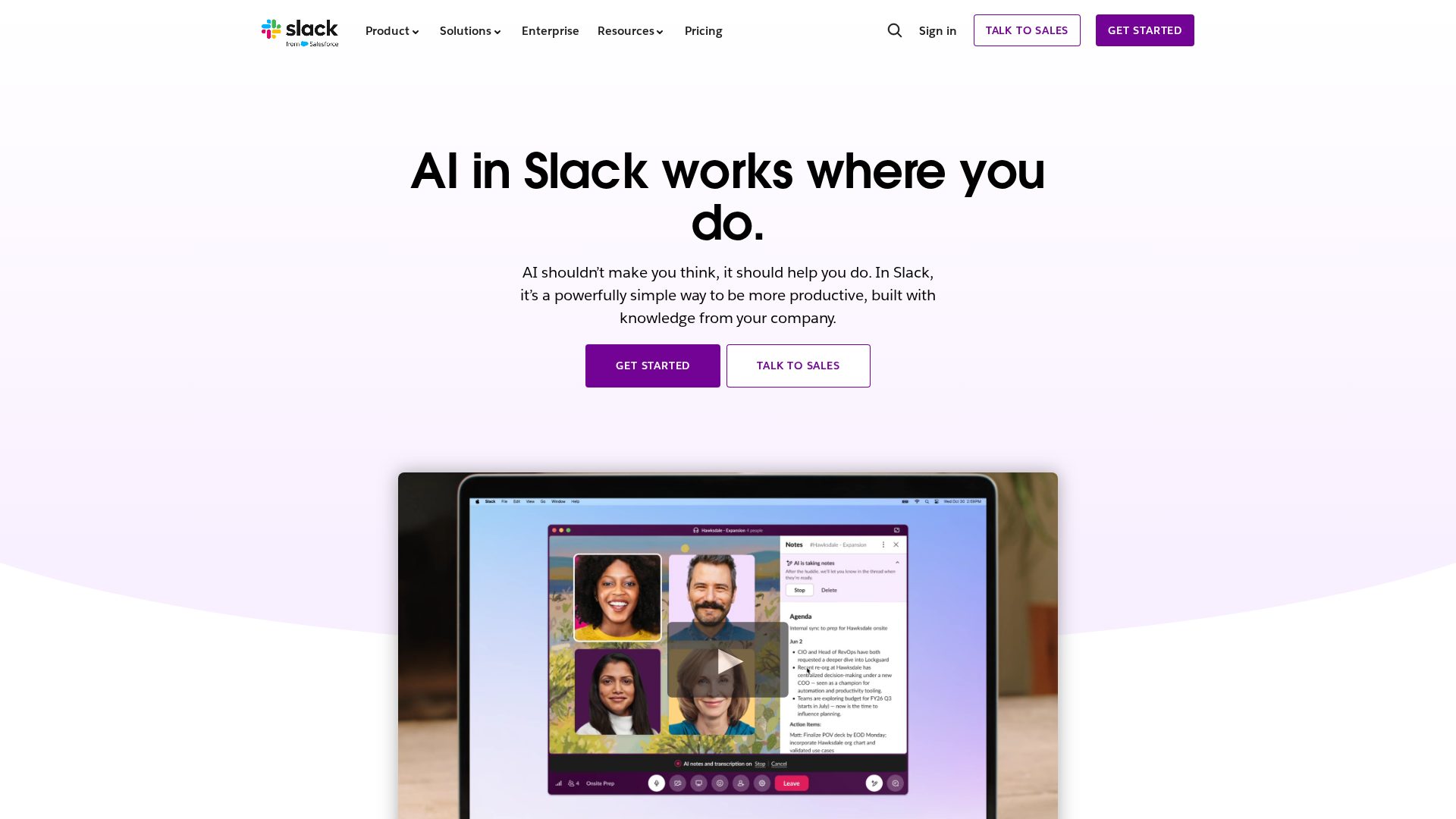
$1,050a year
Pro is $8.75 a person a month if you pay month to month.
The page shows $4.38 today, but that's half off for three months, and then it goes back.
For a team of ten at full price, that's $1,050 a year.
Slack's own AI agent is not in that plan: Slackbot, AI search and AI workflows start on Business+, at $18 a person a month.
For the same ten people, that's $2,160 a year.
And the free plan still hides your messages after 90 days.
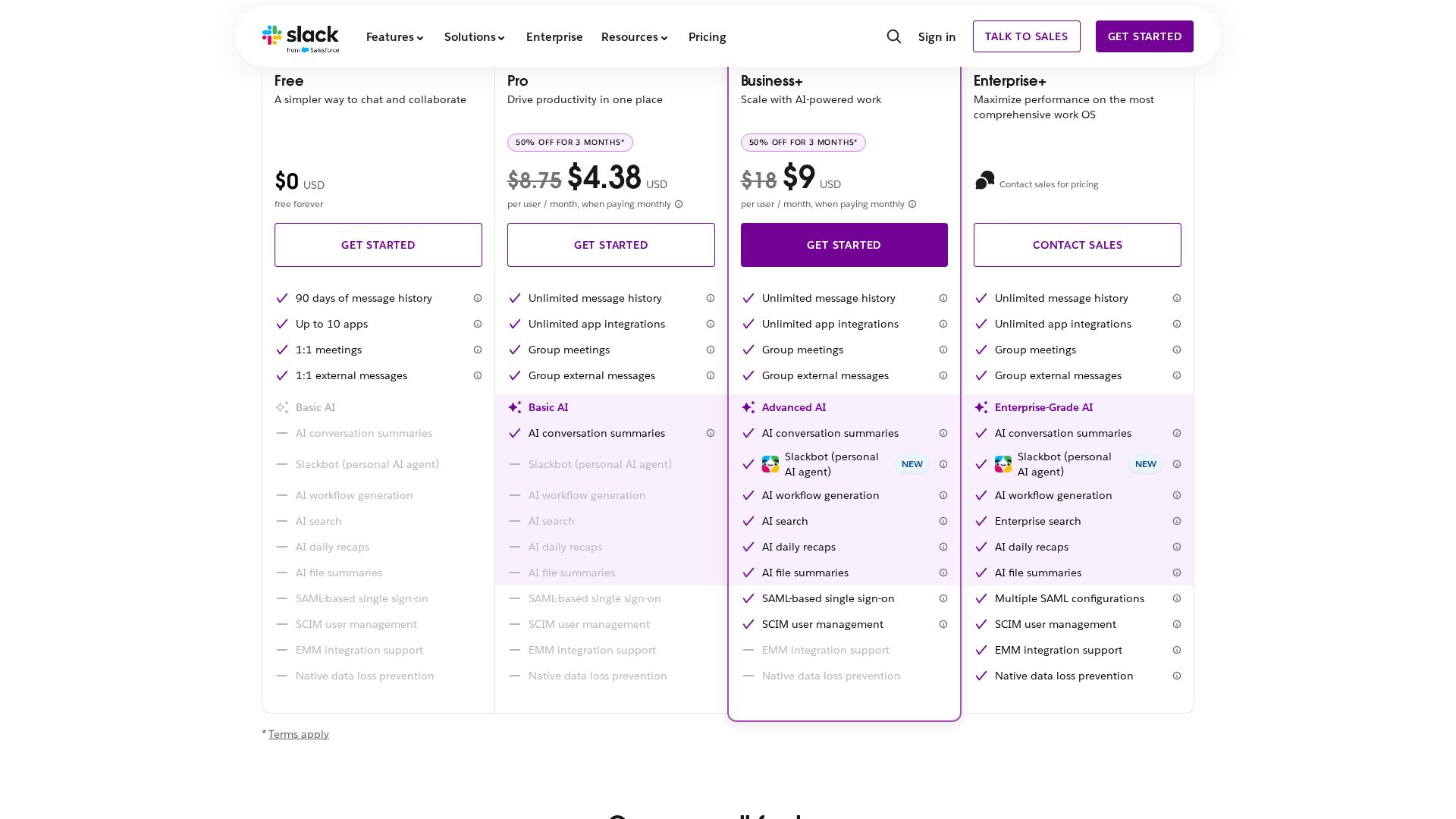
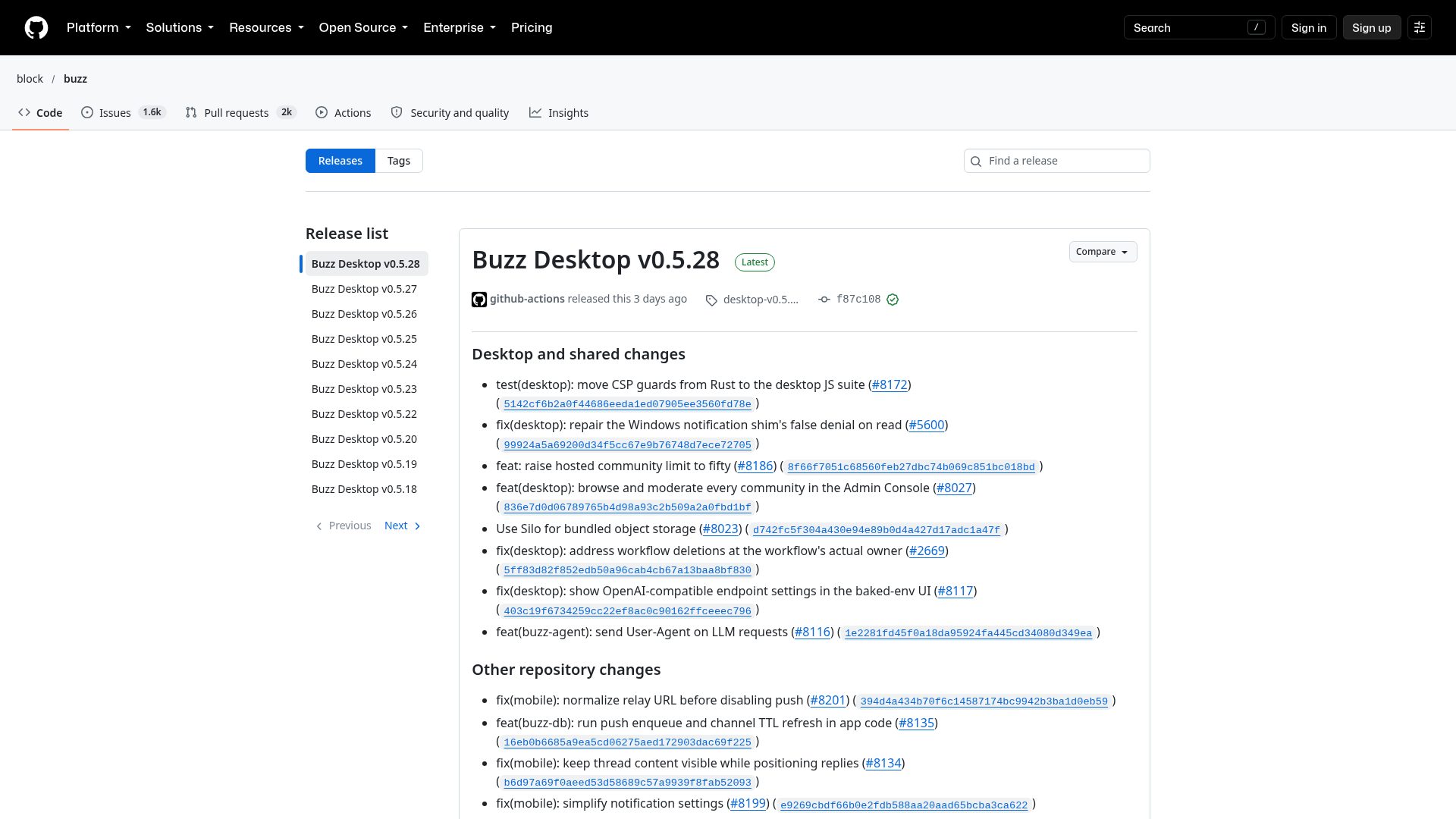
Buzz comes from Block, the company behind Square and Cash App.
It started with an engineer there who had built Block's first Slack agent, and kept hitting one question: if a team shares one bot, whose password is it using?
The announcement post says they ran a quick internal poll about that, and "everyone volunteered someone else."
Buzz is the open source team chat where people and AI agents share the same channels, on a server you run.
github.com/block/buzz
Buzz is a chat app with channels, threads and direct messages, like the one your team already uses.
The difference is that an agent joins a channel as a member, with its own name and its own key, instead of borrowing yours.
You @mention an agent the way you'd mention a person, it does the work, and it answers in the same thread.
Claude Code, Codex and Goose all plug in today, so the agent you already pay for can sit in the room with everyone else.
You own the code, so Claude Code can change it.
Their site: https://buzz.xyz/
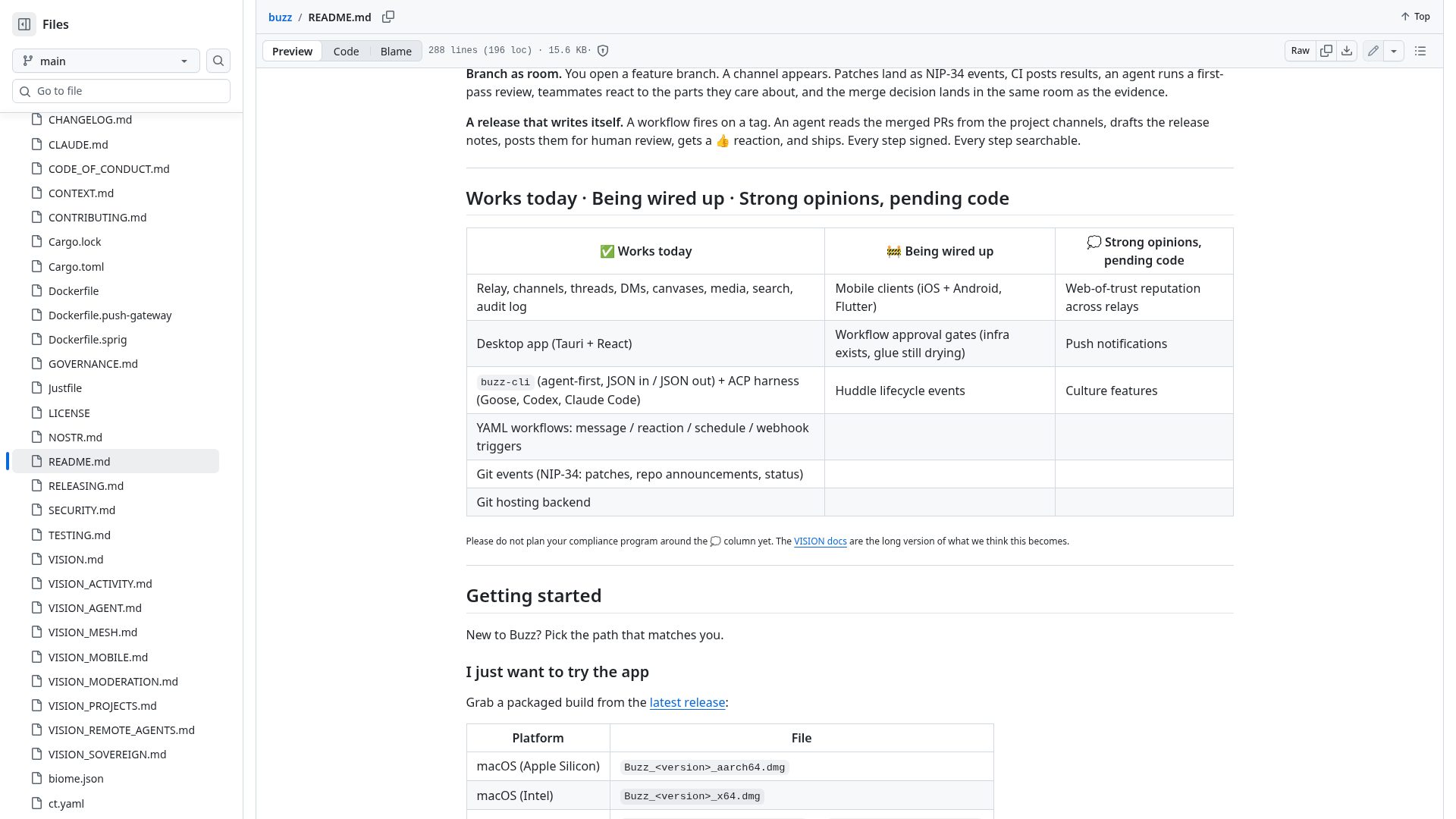
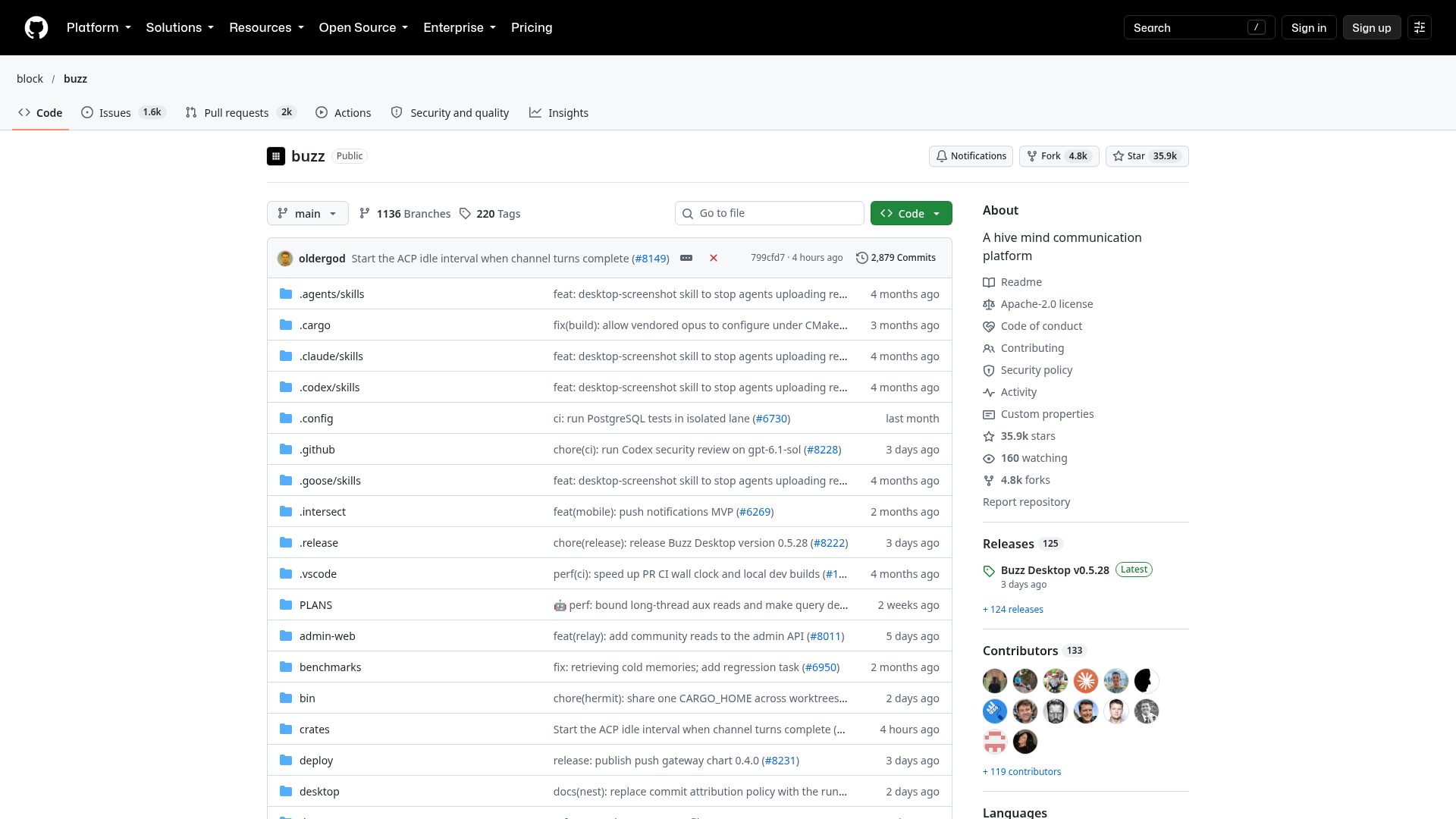
Buzz's own site calls it a developer preview, and the README's own words are "Not finished.
Phone apps for iPhone and Android sit in the README's "being wired up" column, not the "works today" one.
Buzz is free but the agents are not, because you plug in your own Anthropic or OpenAI key, or your own agent subscription, and that bill stays yours.
Running the server yourself means Docker plus Postgres, Redis and an S3-style file store, and the Windows download is unsigned, so Windows warns you before it opens.
There are 1,646 open issues, including Linux screens that freeze and a known bug where an agent can only be mentioned from the machine it runs on.
Your channels. Your agents. Your keys. Your server.
But people are complaining.
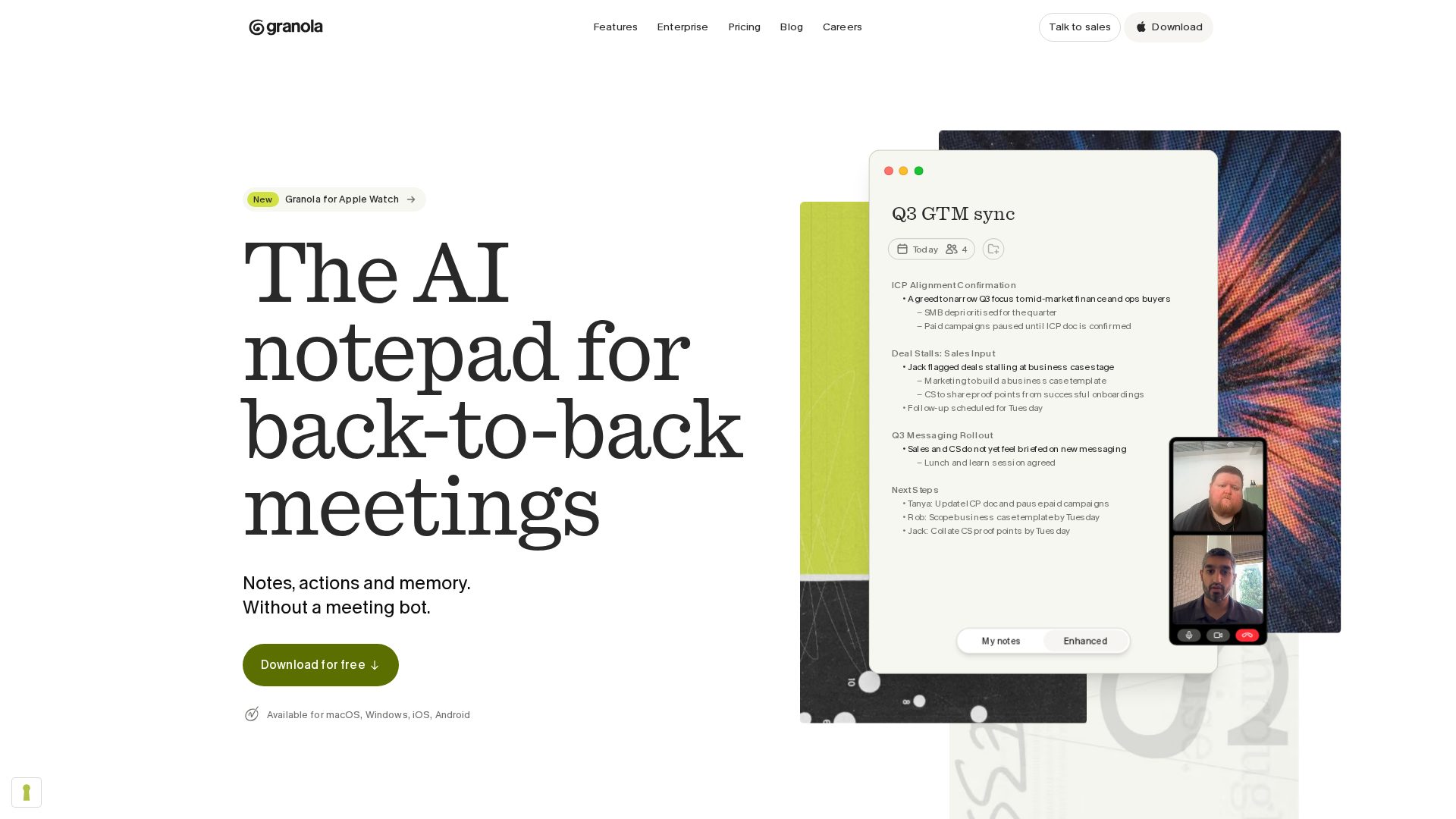
Free users lose sight of any note older than thirty days.
Granola's own free-vs-paid post: "a rolling 30-day window of note access", Oct 2026 ↗Notion, HubSpot and Zapier only connect on the paid plan.
Granola's own plan comparison table, Oct 2026 ↗Your AI can read the full transcripts only if you pay.
Granola: raw transcript access over MCP "is restricted to paid plans", Oct 2026 ↗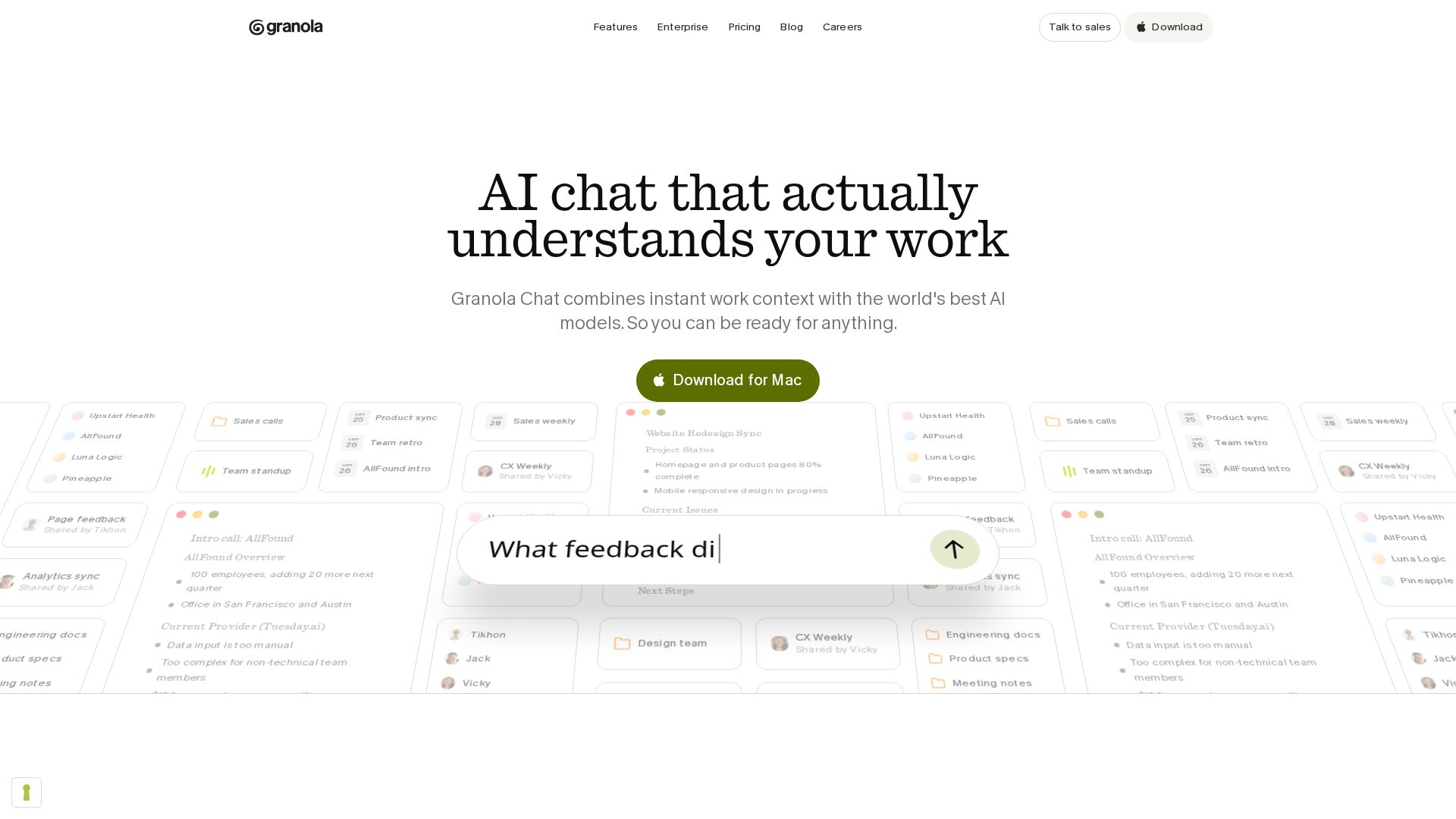
$168a year
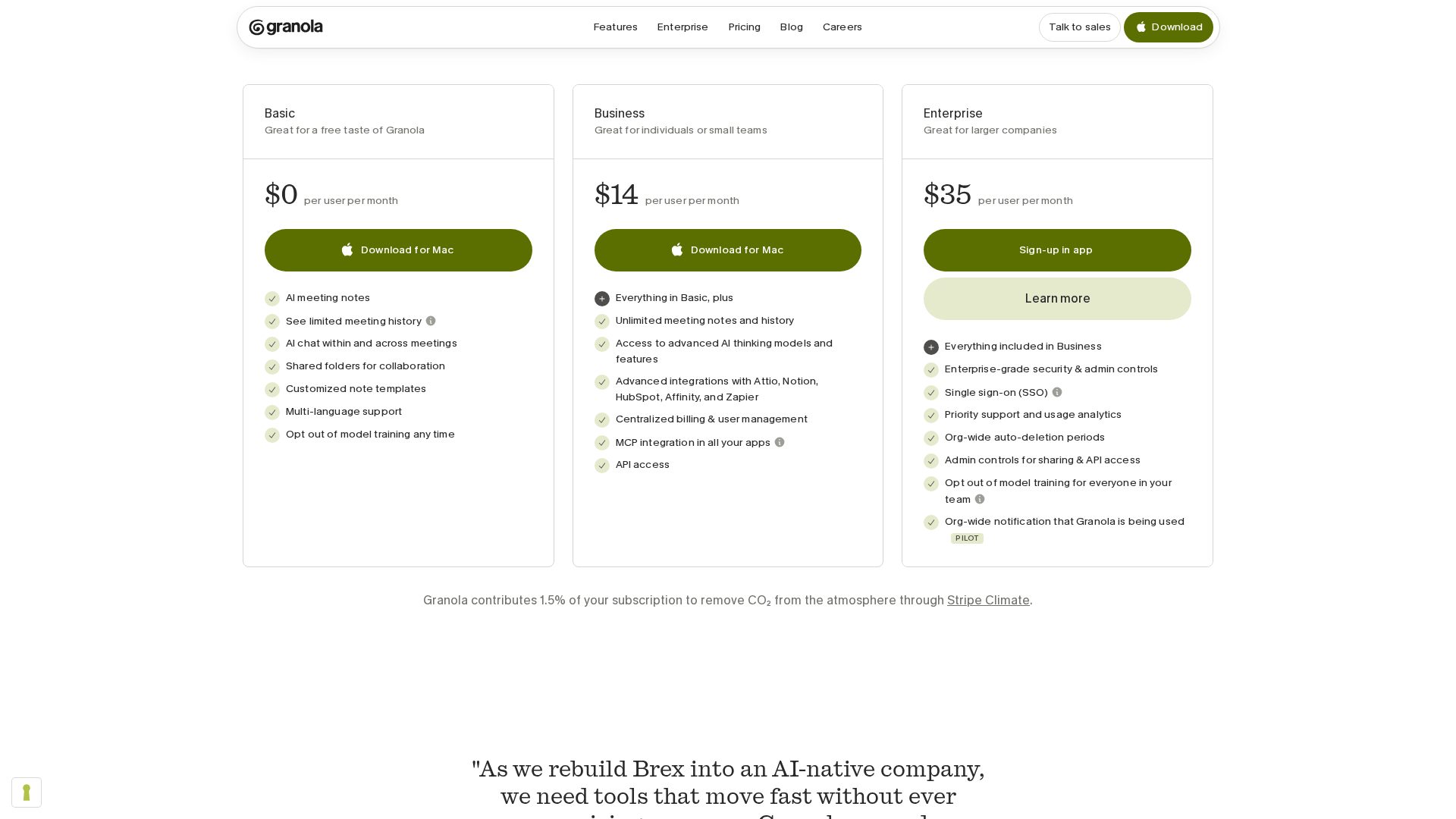
Business is $14 per person a month if you pay month to month.
That's $168 a year, and a team of five pays $840.
Enterprise is $35 per person a month, which is $420 a year each.
Granola's own billing page says yearly billing is for Enterprise contracts only, so there is no discount for paying up front.
Meetily comes from a small AI automation agency with offices in Bengaluru, India and a suburb of Atlanta.
The day job there is building custom AI agents for startups and small companies, and this one went on GitHub in December 2024.
Within a week the whole thing was being rebuilt in Rust, and today it is one desktop app with nothing running behind it.
Meetily is the open source meeting notetaker you can run on your own computer.
github.com/Zackriya-Solutions/meeting-minutes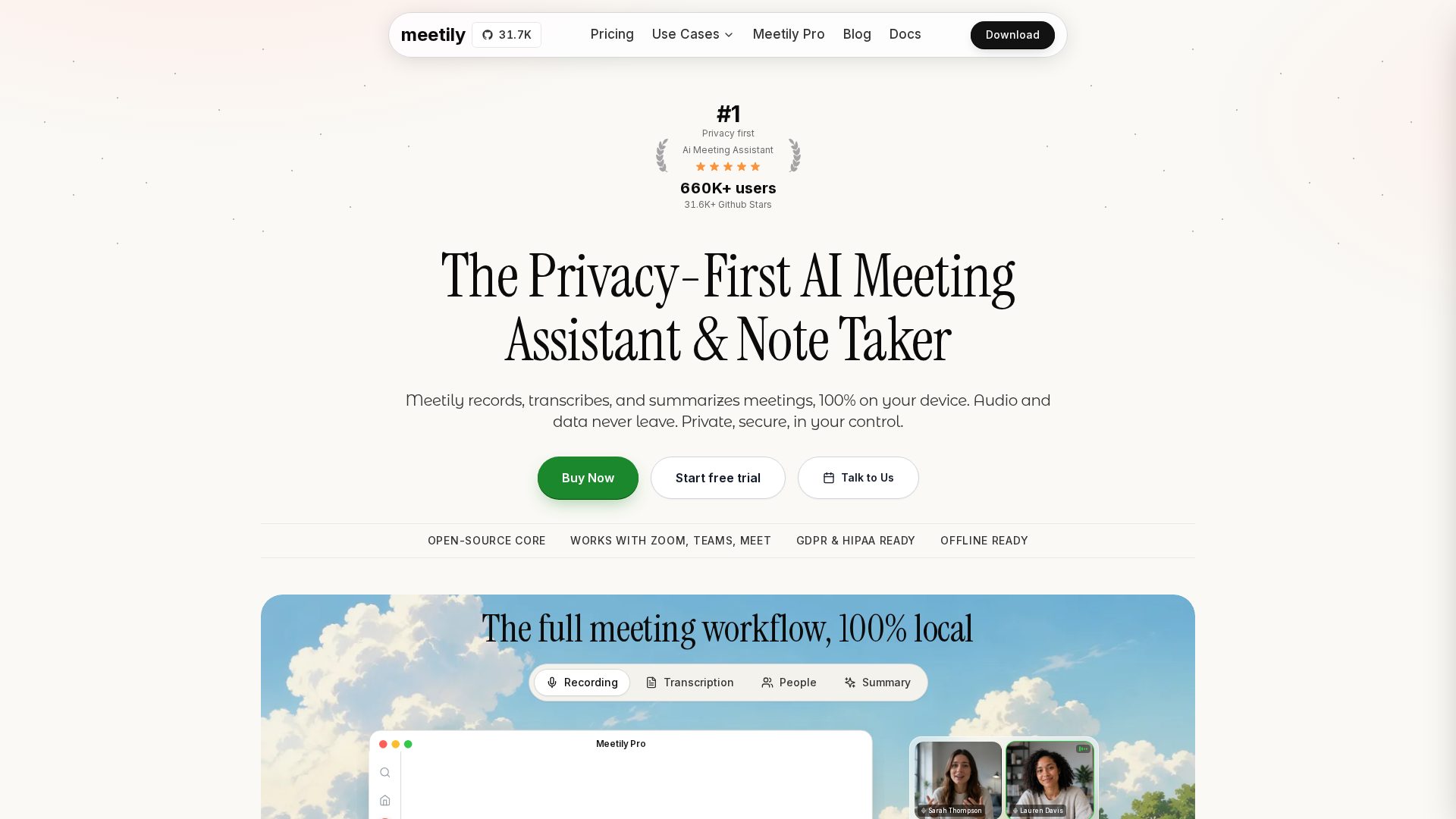
Meetily records the call, writes the transcript and drafts the summary, all on your own machine.
For the summary you point it at a free local model through Ollama, or paste in your own key for Claude, Groq, OpenRouter or OpenAI.
Every meeting lands in one SQLite file in your own app folder, so Claude Code can read last week's notes straight off your disk.
It works with Zoom, Teams, Meet, Webex and Slack huddles, because it just listens to your microphone and your computer's audio.
You own the code, so Claude Code can change it.
Their site: https://meetily.ai/
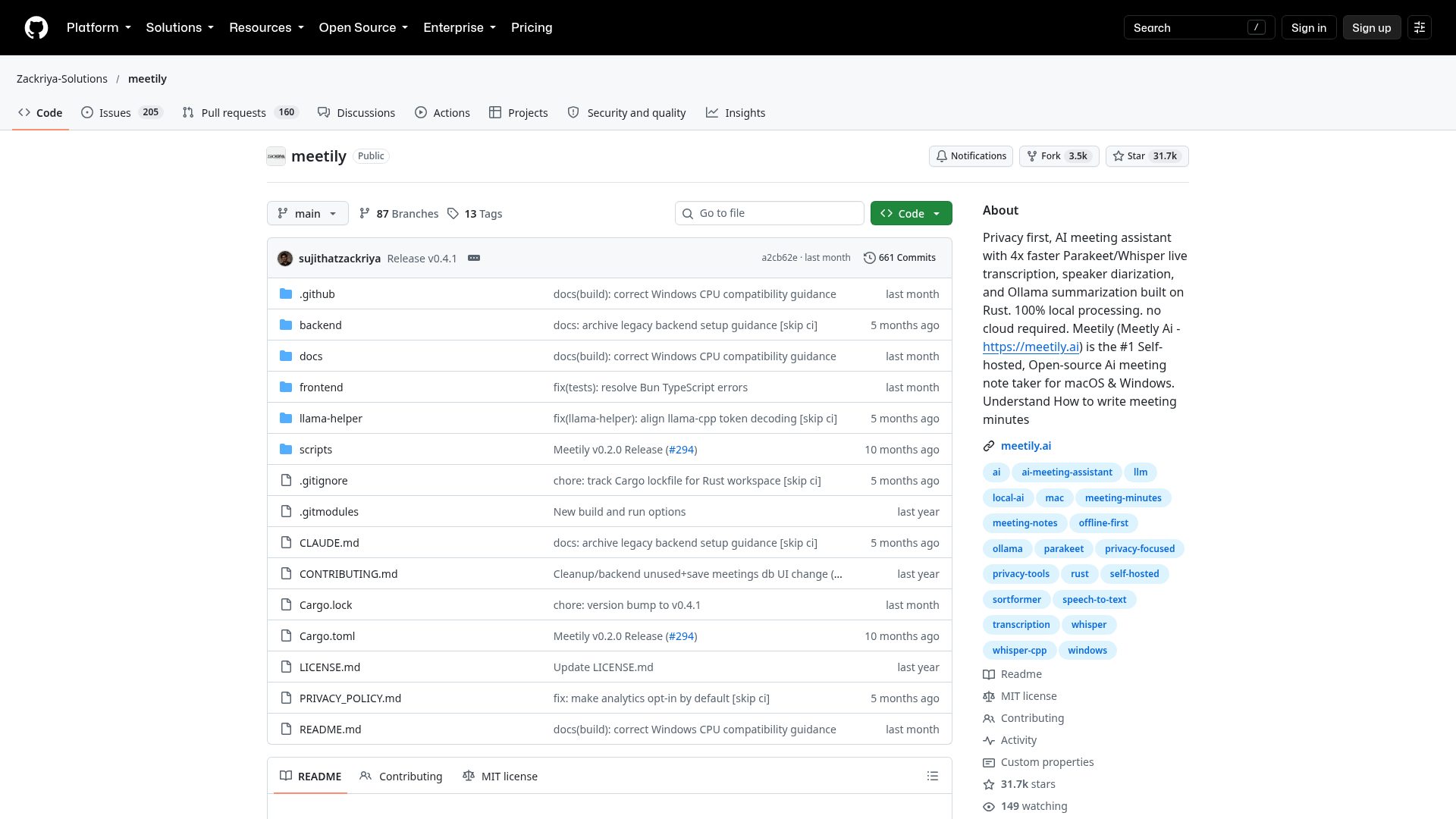
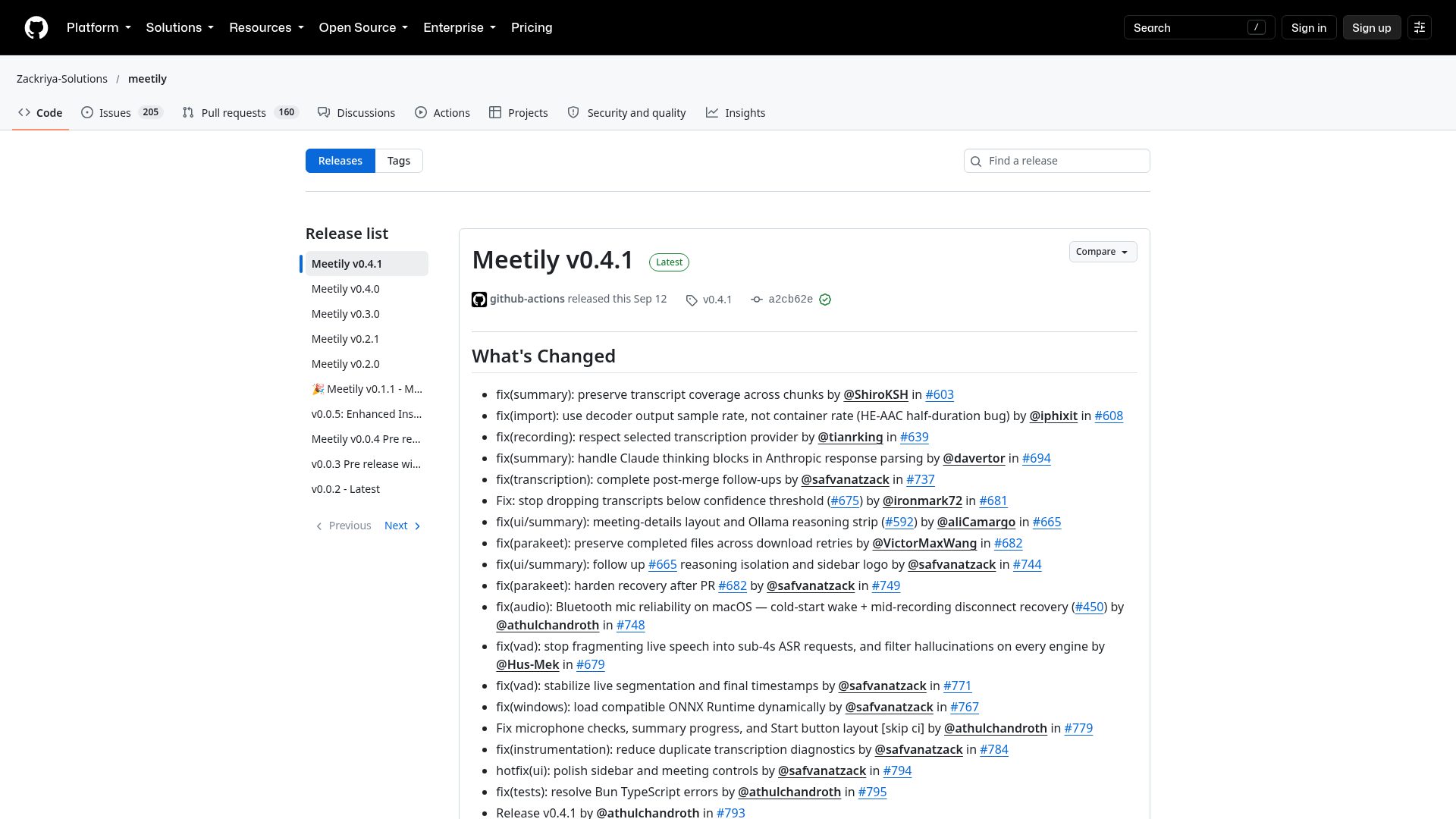
Meetily is young, and the free app is on version 0.4.1, which shipped a month ago.
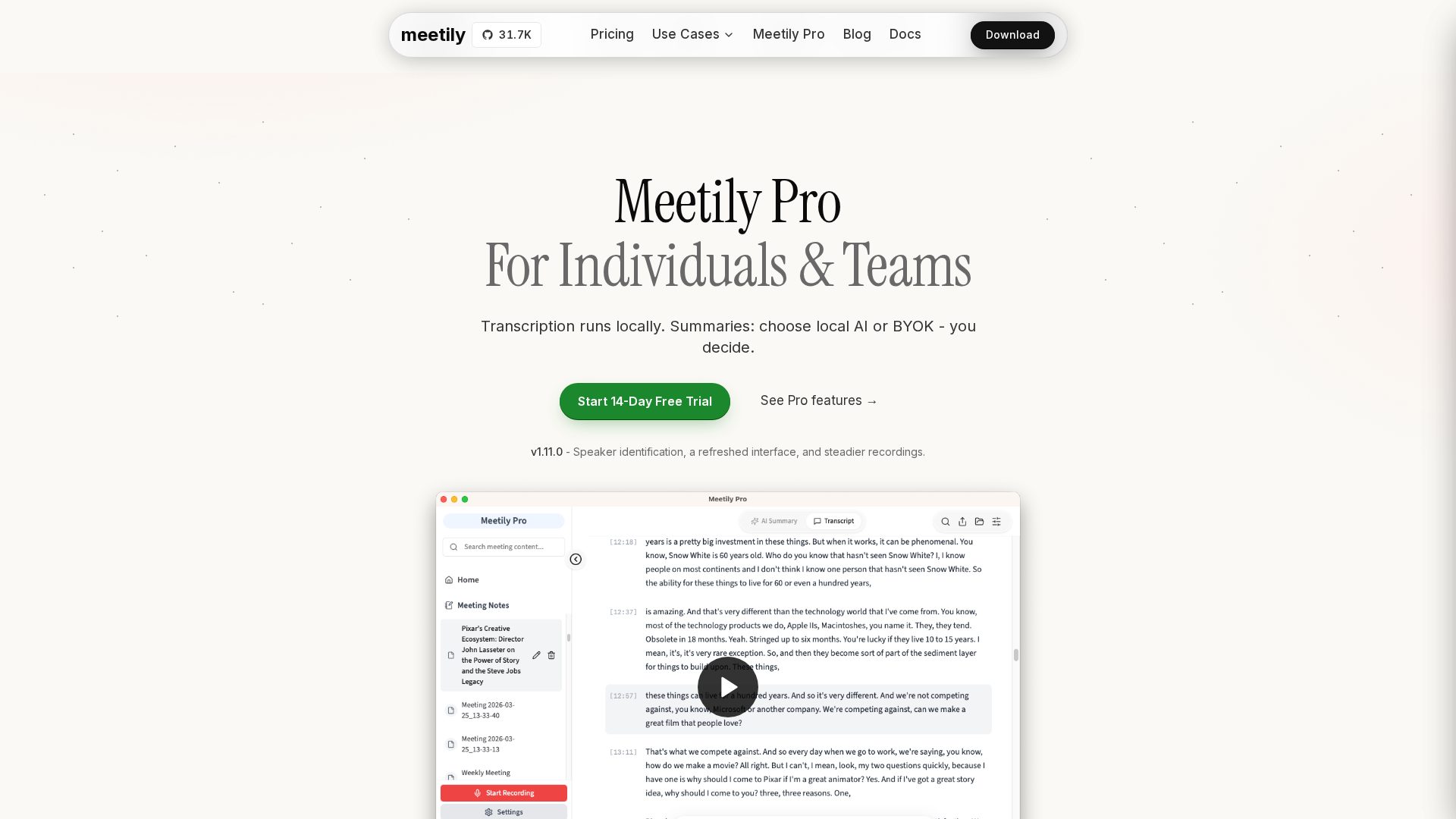
Speaker labels, who said what, are not in the free edition, and neither are PDF and Word exports or the connector that plugs your meetings into Claude and ChatGPT.
Those sit in Meetily Pro, a separate paid app at $10 per person a month billed yearly, which is $120 a year.
There is a Mac installer and a Windows installer, but you still download a transcription model and set up a summary engine before your first meeting, and on Linux you build it yourself.
In many places you have to tell people they are being recorded, so say it at the top of the call.
Your meetings. Your transcripts. Your summaries. Your computer.
But people are complaining.
Run out of free AI and Notion says upgrade.
Notion's own help page on complimentary AI responses, Oct 2026 ↗No live chat, and email support takes one to three days.
Trustpilot review of Notion, Sept 2026 ↗Notion refused a refund on a subscription I never used.
Trustpilot review of Notion, Jan 2026 ↗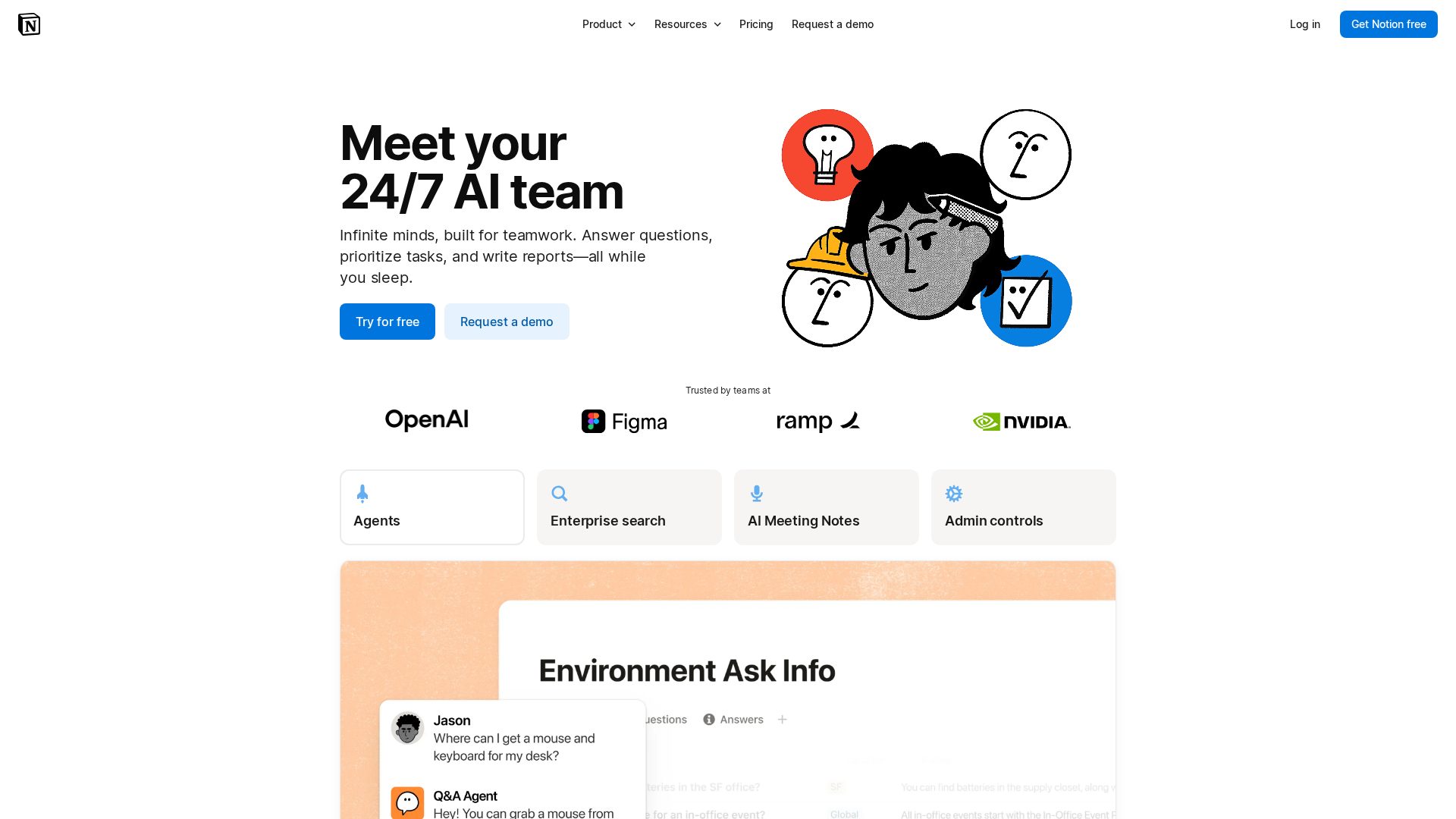
$288a year
Notion AI comes with the Business plan, which is $24 per person a month if you pay month to month.
That's $288 a year for one person, and $2,880 a year for a team of ten.
Free and Plus only get what Notion's own pricing page calls a Limited Trial of it.
Custom Agents cost more on top, $10 per 1,000 Notion credits.
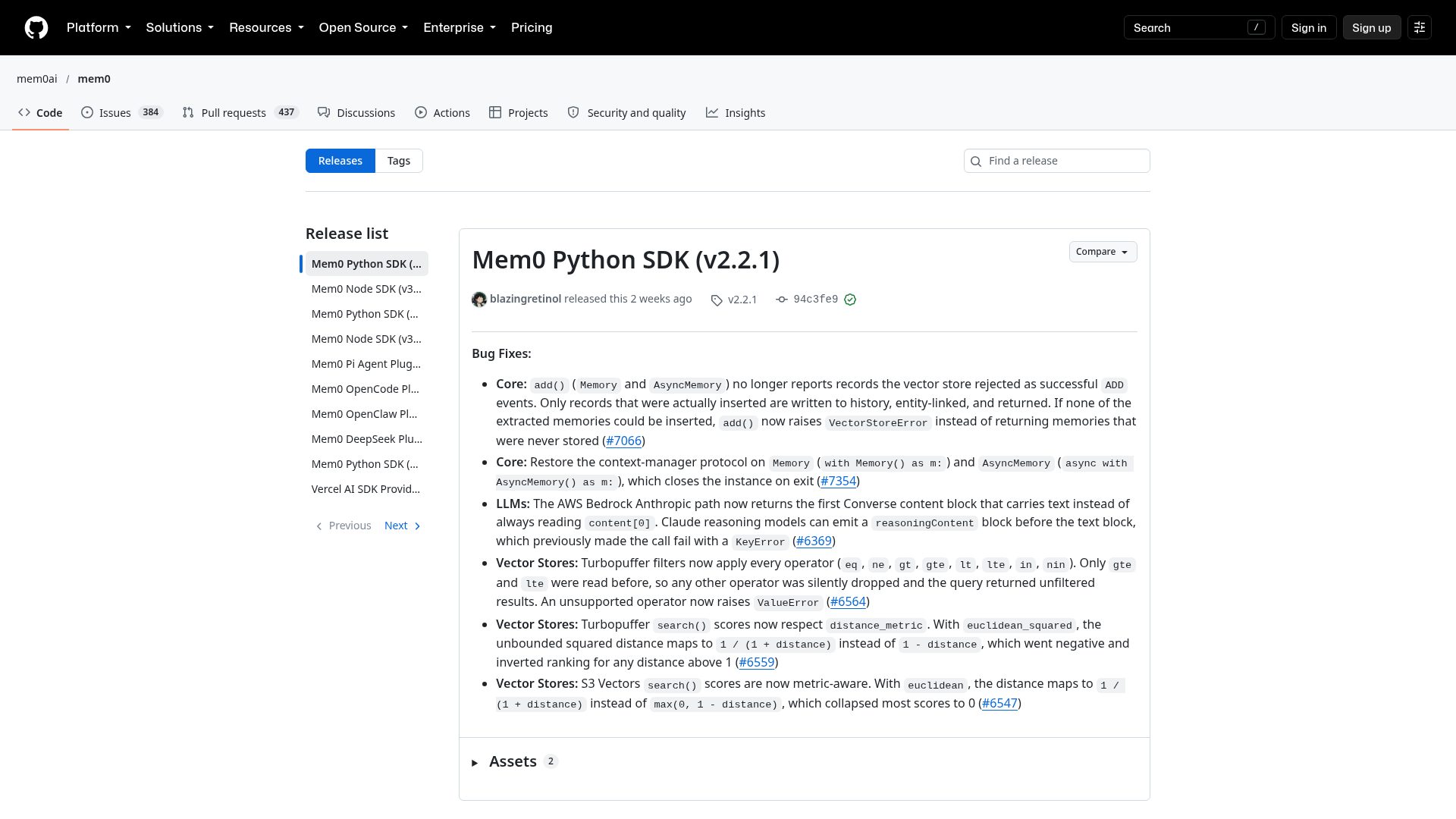
Mem0 started on GitHub in June 2023 under a different name, Embedchain, a tool for feeding your own documents to an AI.
A ten-person company in San Francisco took it through Y Combinator in the summer of 2024 and rebuilt it as memory for agents.
One of the two founders led the AI platform at Tesla Autopilot.
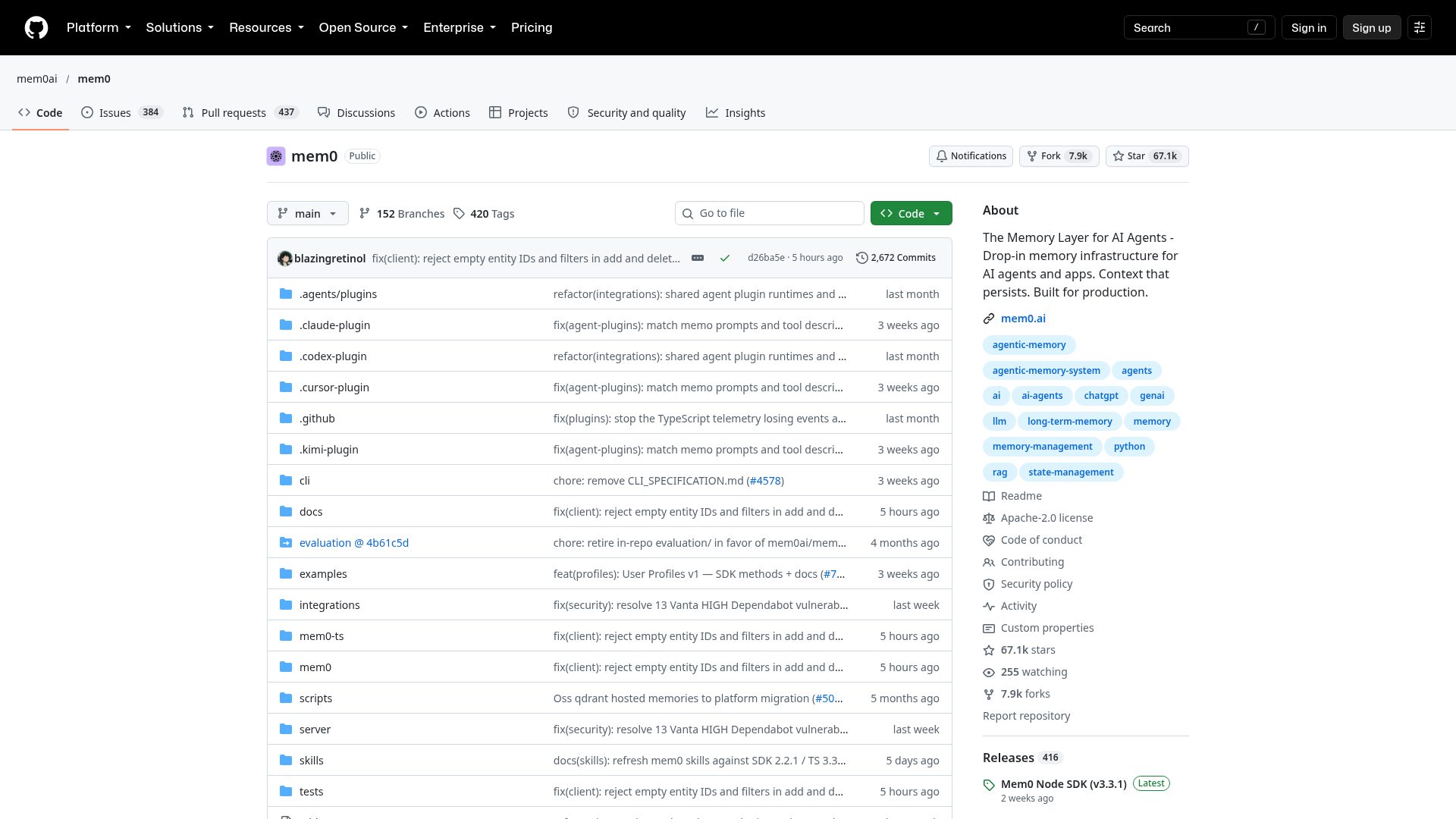
Mem0 is the open source memory layer you can run on your own server.
github.com/mem0ai/mem0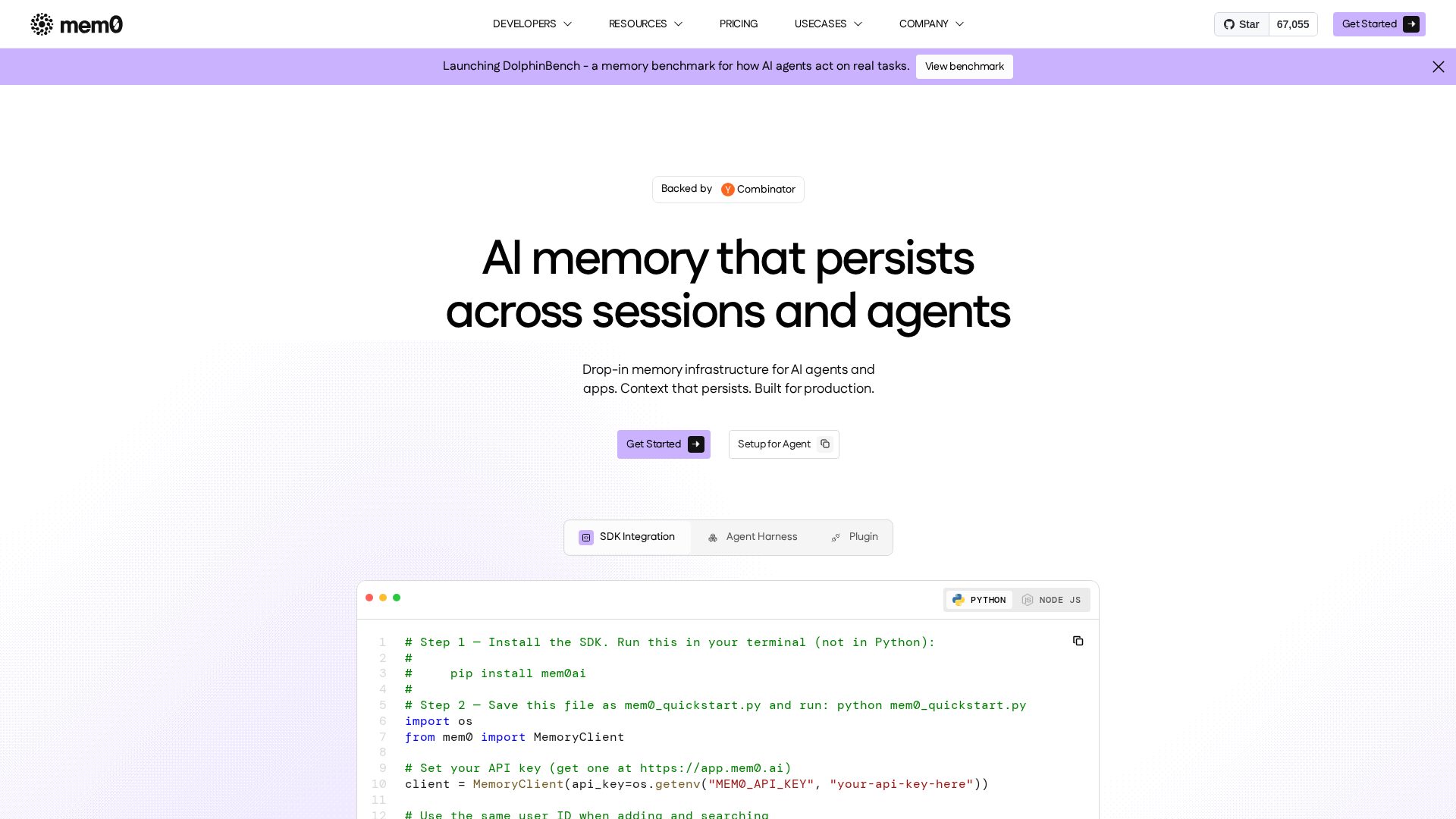
Mem0 is a free Python or JavaScript library that gives an AI agent a long-term memory.
It reads the conversation, pulls out the facts worth keeping, and hands them back the next time you talk.
The Claude Code plugin does it for you, saving your conventions, your decisions, the commands that worked and the ones that failed.
Run the whole thing yourself with one Docker command and you get a dashboard, your own API keys, and a log of every request.
And you own the code, so Claude Code can change it.
Their docs: https://docs.mem0.ai
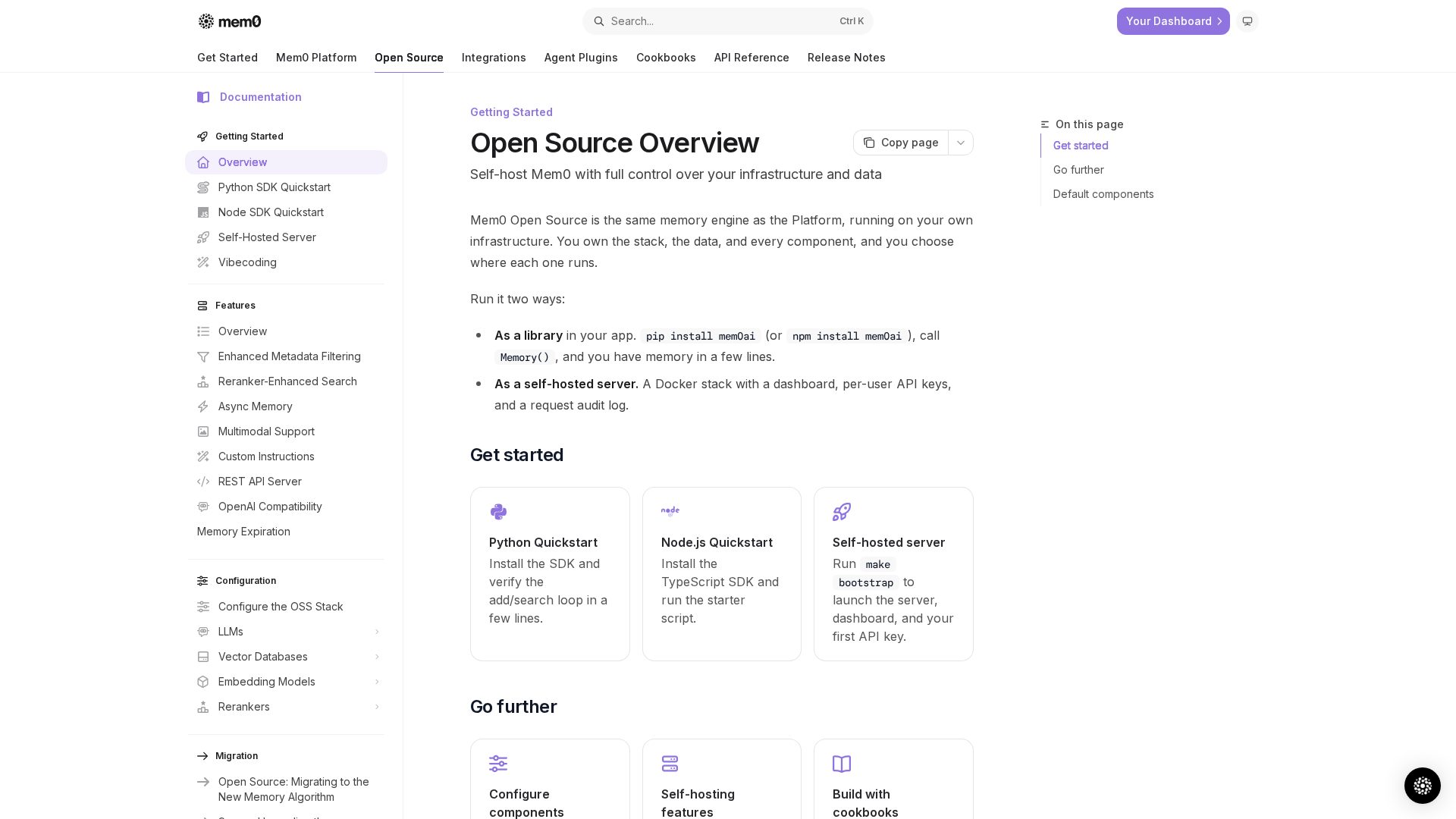
Mem0 is a different shape of tool than Notion AI, it gives your agent a memory rather than writing your docs or searching your wiki.
Mem0 also sells a hosted version, free for 10,000 saved memories and 1,000 lookups a month, then $19 a month, and $249 a month for the Pro plan.
Running it yourself needs a vector database and your own OpenAI API key, because it uses gpt-5-mini and OpenAI's embeddings out of the box.
Mem0's own benchmark scores it 92.5 on a memory test called LoCoMo, and its README says that number comes from the paid hosted version.
Mem0's own docs warn that Claude.ai has its own memory switched on by default and "rarely reaches for a third-party memory tool on its own".
Your agent. Your memories. Your database. Your server.